
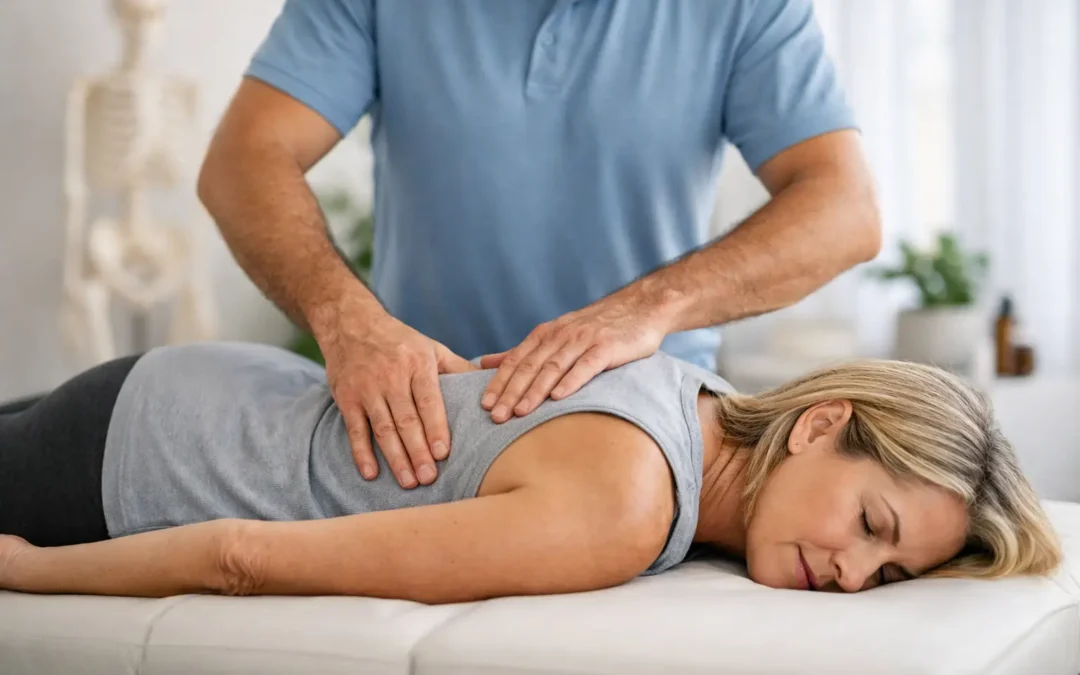
Chronic pain can make ordinary decisions feel complicated: how long can you sit at your desk, can you take the dog for a walk, will a workout leave you worse tomorrow? This manual osteopathy for chronic pain guide explains how hands-on care may fit into a thoughtful, whole-body plan for finding real relief from pain and moving with more confidence.
Pain that lasts for months is rarely just about one tight muscle or one sore joint. It may involve the way you move, old injuries, work posture, sleep, stress, activity levels, and how different areas of the body compensate for one another. Manual osteopathy looks at that bigger picture rather than focusing only on the place that hurts.
What chronic pain can look like
Chronic pain generally refers to discomfort that continues beyond the expected healing period, often for three months or longer. It can be steady, come and go, or flare after certain movements, long days, poor sleep, or physical activity. Back pain, neck tension, headaches, sciatica-like symptoms, hip discomfort, joint stiffness, and recurring sports injuries are common reasons people seek manual osteopathic care.
The source of pain is not always in the most painful spot. For example, persistent low back tension may be influenced by restricted hip movement, a prior ankle injury, prolonged sitting, or a pattern of bracing through the abdomen and pelvis. A recurring headache may have connections to neck mobility, jaw tension, shoulder posture, or stress-related muscle guarding.
That does not mean every pain concern has a simple structural explanation. Chronic pain is complex, and every person deserves an assessment that considers their health history, symptoms, daily demands, and goals. A careful practitioner listens before beginning treatment.
How manual osteopathy approaches chronic pain
Manual osteopathy is a hands-on approach that aims to support healthy movement, circulation, tissue mobility, and balance throughout the body. Treatment may include gentle joint mobilization, soft tissue techniques, stretching, positional release, and other manual methods selected for the individual.
The goal is not to force the body into a perfect position or promise a quick fix. It is to identify areas that may be under strain or not moving well, then help the body move more comfortably and efficiently. When appropriate, treatment may also include practical guidance for posture, pacing activities, breathing, mobility, and recovery between visits.
For someone with desk-related neck and upper back pain, that could mean assessing the neck, shoulders, rib cage, upper back, and jaw, while also discussing the work setup and how often they change positions. For a runner with recurring knee discomfort, it may involve looking beyond the knee to the hips, feet, ankles, training volume, and recovery habits.
This whole-body perspective is one reason manual osteopathy can be appealing to people who are tired of chasing symptoms from one area to the next.
What to expect at your first appointment
A strong first appointment should feel like a conversation as well as an assessment. Your practitioner will usually ask when the pain began, what makes it better or worse, whether you have had surgeries or injuries, what care you have tried, and how pain affects work, sleep, exercise, and home life.
The physical assessment may include observing posture and movement, checking range of motion, and gently feeling areas of tension or restriction. You may be asked to perform simple movements, such as turning your head, raising an arm, bending, walking, or squatting. This helps reveal how your body moves as a connected system.
Treatment should be explained in clear language. You should understand what is being addressed, what you may feel during the session, and what you can reasonably expect afterward. Some people feel looser or more comfortable right away. Others notice gradual changes over several visits, especially when pain has been present for a long time.
Mild tenderness or fatigue can happen after hands-on treatment, particularly when sensitive tissues have been addressed. Your practitioner can help you distinguish a normal short-term response from symptoms that warrant a follow-up call or medical attention.
Manual osteopathy for chronic pain: realistic goals
The most helpful treatment goals are specific and functional. Instead of only aiming for a pain number of zero, consider what improved daily life would look like. Maybe you want to sit through a meeting without constantly shifting, carry groceries more comfortably, sleep without waking from hip pain, return to gardening, or get back to training without fear of a flare-up.
Progress is not always linear. Chronic pain can be influenced by workload, stress, sleep, illness, travel, and changes in activity. A good plan accounts for those realities. It may start with reducing irritation and improving comfortable motion, then gradually build tolerance for the activities that matter to you.
Frequency depends on your condition, health history, and response to care. A recent flare-up may benefit from closer follow-up at first, while a long-standing issue may call for periodic treatment combined with consistent movement and self-care. The right schedule should be personalized, not based on a one-size-fits-all package.
Manual therapy works best as part of an active recovery plan when activity is appropriate. The hands-on portion can help reduce barriers to movement, but lasting change often comes from pairing treatment with manageable habits. That might be a brief mobility routine, short walking breaks during the workday, a gradual return to strength training, or strategies for modifying tasks that repeatedly trigger pain.
When a whole-body assessment matters most
A whole-body assessment can be particularly valuable when symptoms keep returning despite treating the painful area alone. It may also help when pain shifts from one side to another, feels connected to posture or repetitive work, follows an old injury, or limits activities you want to continue doing.
Pregnancy and the postpartum period are other times when the body can be adapting quickly. Changes in weight distribution, tissue flexibility, sleep, lifting demands, and feeding positions can contribute to back, hip, pelvic, neck, and wrist discomfort. Gentle, individualized care can focus on comfort and mobility while respecting the body’s changing needs.
For older adults, the focus may be on maintaining confidence with walking, reaching, stairs, and everyday independence. For active people, it may be on returning to a sport with a better understanding of load management and movement patterns. The method may be hands-on, but the plan should always reflect the person in front of the practitioner.
When manual osteopathy is not the only answer
Manual osteopathy can be a useful part of care, but it is not a substitute for medical evaluation when symptoms suggest a more serious concern. Seek prompt medical attention for sudden or severe pain after trauma, chest pain, unexplained shortness of breath, fever with severe pain, significant unexplained weight loss, new weakness, numbness that is worsening, loss of bowel or bladder control, or other concerning neurological symptoms.
It is also wise to involve your physician or specialist when pain is unexplained, progressively worsening, associated with inflammatory or systemic conditions, or not responding as expected. In some situations, imaging, medication, physical therapy, mental health support, or care from another health professional may be appropriate alongside manual treatment.
Thoughtful care does not mean claiming that one approach solves every problem. It means recognizing when hands-on treatment is appropriate, when to adapt the plan, and when a referral helps protect your health.
Getting more from each session
You do not need to overhaul your life to support progress. Pay attention to patterns between visits. Notice which movements feel easier, what reliably aggravates symptoms, how you sleep, and whether stress or a busy week changes your pain. Sharing these details helps your practitioner refine treatment instead of guessing.
Try to avoid the boom-and-bust cycle of doing too much on a good day and needing several days to recover. Small, repeatable amounts of movement often build tolerance more effectively than occasional intense efforts. If you work at a computer, even a few brief position changes during the day can be more realistic and useful than waiting for one perfect stretching session.
At Osteo Difference, care is centered on listening closely, explaining what may be contributing to your discomfort, and creating a plan that respects your pace. For Milton-area patients, that can mean treatment focused not only on reducing pain today, but also on helping you return to the work, family time, exercise, and routines that make you feel like yourself.
Chronic pain may have changed the way you move through your day, but it does not have to make every decision for you. A careful assessment, realistic goals, and steady support can give your body room to move forward.