
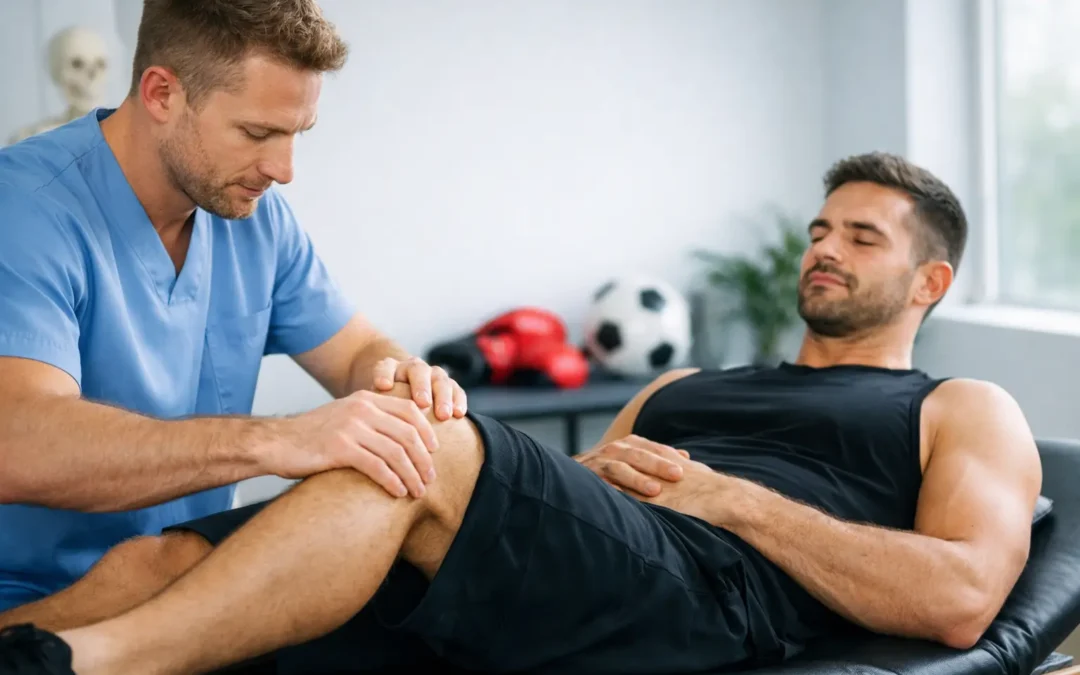
A runner develops knee pain halfway through training. A tennis player feels a pull in the shoulder that never quite settles. A weekend hockey player rolls an ankle, rests for a few days, then finds that the hip and low back start aching instead. These are familiar patterns, and they help explain how osteopathy relieves sports injuries: it looks beyond the sore area to understand what may be changing the way the whole body moves.
Sports injuries are not always caused by one dramatic event. Repetitive training, sudden increases in activity, poor recovery, old injuries, and everyday posture can all add stress to muscles, joints, tendons, and connective tissue. Osteopathic manual therapy is a hands-on, non-invasive approach that aims to reduce restrictions, improve mobility, and support the body's natural recovery process. The goal is not simply to make pain quieter for a day. It is to help you move with greater comfort and confidence as you return to the activities you enjoy.
Why a sports injury can affect more than one area
The body works as a connected system. When an ankle is stiff after a sprain, for example, you may unconsciously shift weight away from it. Over time, that compensation can place extra demand on the knee, hip, pelvis, or lower back. Similarly, shoulder pain may be influenced by neck tension, upper-back stiffness, rib movement, or the way the shoulder blade moves during lifting or throwing.
This does not mean every ache has one simple cause. Sports injuries can involve irritated tissue, reduced joint motion, training load, technique, sleep, stress, and recovery habits. A careful osteopathic assessment looks at the whole picture rather than assuming the painful spot is the only problem.
At an appointment, a practitioner may ask how the injury happened, what movements aggravate it, how your training has changed, and whether you have had previous injuries. They then assess posture, movement patterns, joint mobility, muscle tension, and how different areas of the body work together. This individualized approach helps guide treatment toward the restrictions and compensations most relevant to you.
How osteopathy relieves sports injuries through hands-on care
Osteopathic manual therapy uses gentle, targeted techniques based on your symptoms, comfort level, and stage of recovery. Treatment is not one fixed routine. The right approach for a fresh calf strain will differ from care for long-standing hip tightness or recurring low-back discomfort after golf.
Reducing tension and improving tissue mobility
After an injury, surrounding muscles often tighten to protect the area. While this response can be useful at first, persistent guarding may limit movement and make normal activity feel uncomfortable. Gentle soft-tissue work can help reduce excess tension in muscles and fascia, the connective tissue that surrounds and supports body structures.
Improved tissue mobility may make it easier to move a joint through its available range without pulling or bracing. For an athlete, that can mean a smoother squat, a more comfortable stride, or less stiffness when reaching overhead. Relief varies from person to person, and treatment should never force a painful range of motion.
Restoring joint and spinal movement
Joints do not need to be severely injured to become restricted. Repetitive motions, impact, prolonged sitting, and protective movement after an injury can all affect how freely a joint moves. Osteopathic techniques may be used to gently address restrictions in the spine, hips, ribs, shoulders, knees, ankles, or other areas affecting your movement.
Better mobility does not mean pushing flexibility as far as possible. Athletes need controlled, usable movement. If a hip lacks motion, the lower back may take on more rotation. If the upper back and ribs are stiff, the neck and shoulder can work harder during swimming, racquet sports, or overhead lifting. Restoring appropriate movement in these areas can reduce unnecessary strain elsewhere.
Supporting circulation and recovery
Healing tissues need time, appropriate loading, and a healthy circulatory environment. Hands-on treatment may support circulation and fluid movement in areas that feel tight, congested, or sore after activity. This can be particularly helpful when recovery has slowed because you are avoiding normal movement or working around discomfort.
Osteopathy is not a replacement for rest when rest is needed. A significant acute injury may require protection, medical assessment, imaging, or a gradual rehabilitation plan. But once it is appropriate to begin moving again, osteopathic care can complement recovery by helping the body tolerate movement more comfortably.
Improving body awareness and movement habits
Pain often changes movement before we consciously notice it. You may shorten one stride, rotate away from a painful side, grip through the shoulders during a lift, or hold tension in the jaw and neck while cycling. These habits can continue even after the original injury begins to improve.
A practitioner can help you notice these patterns and explain why certain areas are being treated. That education matters. When you understand how your body compensates, it becomes easier to make sensible changes to training, warm-ups, workstation habits, and recovery routines. Lasting improvement is more likely when treatment is paired with a realistic plan for how you move between appointments.
Common sports concerns osteopathy may support
People seek osteopathic care for a wide range of activity-related pain and mobility concerns. These can include ankle sprains and lingering stiffness, knee pain associated with running or overuse, hip and low-back discomfort, shoulder and rotator cuff irritation, neck tension, tennis or golfer's elbow, calf and hamstring strains, and repetitive strain from strength training.
The same diagnosis can look different in two people. One runner with knee pain may need support around ankle mobility and hip control, while another may be dealing with a sudden increase in mileage and inadequate recovery. For that reason, a personalized assessment is more useful than a one-size-fits-all treatment plan.
When osteopathy works best alongside other care
Osteopathic manual therapy can be a valuable part of a broader recovery plan, particularly for mild to moderate musculoskeletal injuries, recurring stiffness, and movement restrictions. It often works best alongside gradual strengthening, mobility exercises, appropriate training modifications, and guidance from other health professionals when needed.
There are times when prompt medical care should come first. Seek urgent assessment for a visible deformity, inability to bear weight, severe swelling, a suspected fracture, numbness or weakness that is getting worse, loss of bladder or bowel control, chest pain, or pain following a significant collision. A practitioner should also know about previous surgeries, diagnosed conditions, medications, and any symptoms that do not fit a typical sports injury.
Being proactive can prevent a small issue from becoming a longer interruption. You do not have to wait until pain stops you completely. If a movement repeatedly feels limited, a body part remains stiff after adequate recovery, or you keep returning to the same injury, an assessment can help identify factors worth addressing.
Returning to activity without rushing the process
Most active people want one thing after an injury: to get back to their sport. That is understandable, but the fastest return is not always the safest one. Pain may ease before strength, coordination, and confidence have fully returned. Going straight back to previous intensity can re-irritate the area or shift stress somewhere else.
A gradual return considers how you feel during activity, later that day, and the following morning. It may involve reducing distance, weight, speed, or frequency temporarily, then building up as your body tolerates more. Good recovery also includes sleep, hydration, nutrition, and enough rest between demanding sessions. These basics are not glamorous, but they strongly influence how well tissues adapt to training.
For active people in Milton and the surrounding area, thoughtful hands-on care can offer real relief from pain while keeping the focus on long-term movement. The most useful treatment plan is one that respects your goals, listens to your body, and helps you return to the activities that make you feel like yourself - one comfortable, capable movement at a time.