
Pregnancy brings significant changes to the body. As the abdomen grows, you may notice changes in how you sleep, walk, sit at your desk, get in and out of the car, or move through everyday activities. These changes are a normal part of pregnancy, but discomfort does not necessarily have to be something you simply tolerate. Gentle osteopathic manual therapy may provide supportive care for comfort and mobility during pregnancy, when appropriate. At Osteo Difference, pregnancy-related care is approached conservatively and individually. The focus is on comfortable movement, areas of muscular tension and mechanical restriction, and practical strategies that may make everyday activities easier. Important pregnancy-care information: Osteo Difference does not provide osteopathic manual treatment during the first trimester of pregnancy. We recommend that patients discuss manual therapy with their physician, midwife, or other prenatal healthcare provider, particularly if there are any pregnancy-related concerns or complications. Osteopathic manual therapy may be considered before pregnancy and after the first trimester when appropriate.
Why discomfort can develop during pregnancy
Pregnancy requires the body to continually adapt. As the abdomen grows, the centre of gravity changes and the muscles and joints around the spine, pelvis, hips, rib cage, and shoulders may be loaded differently. Some people experience discomfort in the lower back, hips, pelvis, upper back, neck, or ribs. Others notice increased muscle tension, stiffness, or difficulty finding a comfortable position while sleeping. There is rarely one mechanical factor responsible for discomfort. Changes in activity, prolonged sitting, altered posture, previous injuries, muscle tension, and the physical demands of pregnancy can all influence how movement feels. For this reason, osteopathic manual therapy takes a whole-body approach rather than focusing exclusively on the area where discomfort is felt.
How gentle osteopathic manual therapy may support pregnancy comfort
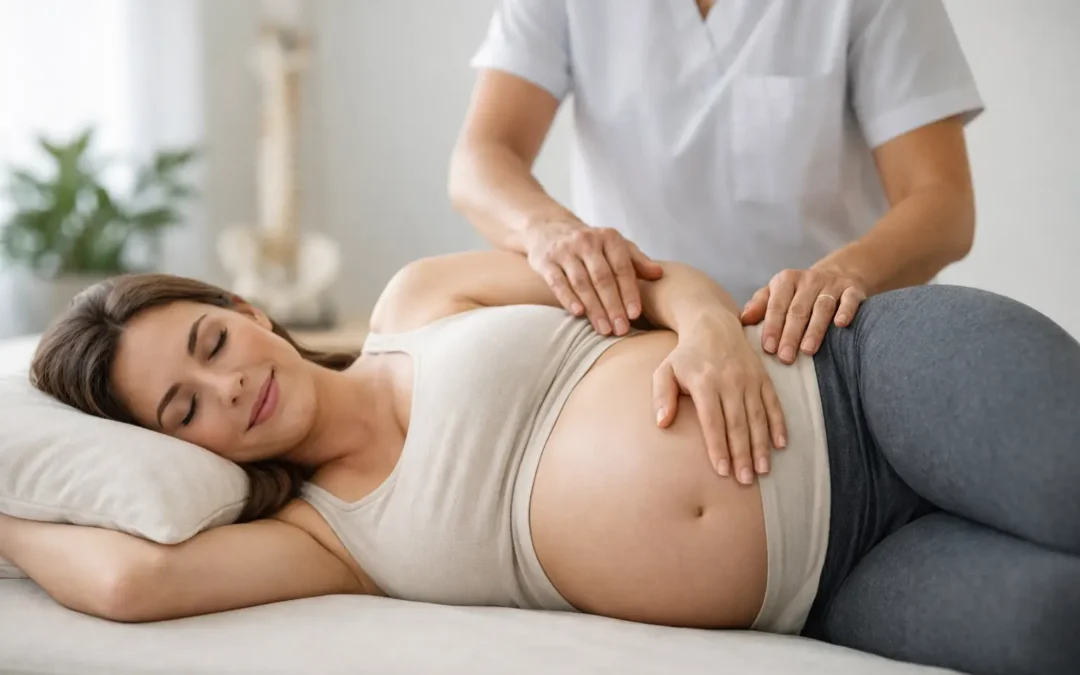
Osteopathic manual therapy involves hands-on assessment and gentle manual techniques directed toward areas of muscular tension, joint mobility, and other mechanical restrictions. During pregnancy, treatment should be adapted to the individual's stage of pregnancy, comfort, symptoms, medical history, and positioning needs. The approach should be gentle, comfortable, and non-forceful. Treatment is not intended to manipulate the baby, change the baby's position, or "put the pelvis back into place." Instead, the goal is to support comfortable movement and reduce unnecessary mechanical strain where appropriate. Treatment may include comfortable side-lying or supported positions, depending on the individual's needs and stage of pregnancy. Pillows and other supports can be used to help maintain a comfortable position throughout the session.
Supporting back, hip, and pelvic comfort
As pregnancy progresses, changes in body mechanics can place different demands on the lower back, hips, and pelvis. Some people notice an ache after standing or walking for extended periods. Others may experience discomfort when turning in bed, climbing stairs, getting dressed, or getting in and out of a vehicle. Gentle manual therapy may be used to address areas of muscular tension and restricted movement around the hips, pelvis, lower back, and surrounding structures. The purpose is not to diagnose a pregnancy-related condition or claim to correct the position of the pelvis. Instead, the assessment considers how the body is moving and whether gentle manual care may be appropriate to support comfort and mobility. Pelvic discomfort can have many possible causes. If symptoms are persistent, severe, unusual, or concerning, consultation with a physician, midwife, or other appropriate healthcare professional is important.
Supporting upper-back, neck, and rib comfort
Pregnancy-related changes are not limited to the lower back and pelvis. Changes in posture, sleeping position, breast tissue, daily activities, and the increasing demands placed on the body can contribute to tension around the neck, shoulders, upper back, and ribs. For people who work at a computer, drive regularly, or spend significant time using a phone, these factors may add to existing postural strain. Gentle osteopathic manual therapy may be used to work with areas of muscular tension and restricted movement around the upper back, ribs, shoulders, and neck, with positioning and techniques modified to maintain comfort. The intention is to support easier movement rather than to claim that manual treatment treats an underlying medical condition.
Supporting comfortable everyday movement
Pregnancy comfort is not only about pain. It can also mean being able to walk more comfortably, change positions in bed, sit at work, perform household activities, or move through the day with less physical strain. An osteopathic manual practitioner may also discuss simple movement and positioning strategies that fit your daily routine.
Depending on your circumstances, this might include:
- Changing positions regularly when sitting for extended periods
- Taking short movement breaks during the workday
- Adjusting your workstation
- Using pillows to support comfortable sleeping positions
- Modifying activities that repeatedly increase discomfort
- Maintaining appropriate physical activity as recommended by your prenatal healthcare provider
Small changes in daily movement can sometimes make a meaningful difference in overall comfort.
What to expect during a pregnancy osteopathic manual therapy appointment
A first appointment should begin with a conversation about your current situation. Your practitioner may ask about your pregnancy stage, symptoms, previous injuries, activity level, work demands, sleep, and any relevant information provided by your prenatal healthcare team. The assessment should be gentle and clearly explained. You may be asked to perform simple movements or change positions so the practitioner can observe how you move. If manual therapy is appropriate, techniques are selected according to your comfort and individual circumstances. During pregnancy, there is no need for forceful techniques. Treatment should remain gentle and comfortable, with positioning modified whenever necessary. You should always be able to tell your practitioner if a position or technique does not feel comfortable.
When osteopathic manual therapy may be appropriate
After the first trimester, gentle osteopathic manual therapy may be considered as supportive care for people experiencing mechanical discomfort or reduced mobility during pregnancy.
It may be considered for concerns such as:
- General back or hip discomfort
- Muscular tension
- Postural strain
- Reduced mobility
- Upper-back or shoulder tension
- Rib-area stiffness
- Difficulty finding comfortable movement positions
These symptoms can have different causes, and osteopathic manual therapy is not intended to diagnose or treat pregnancy complications or medical conditions. If you have a medical concern, your physician, midwife, or other prenatal healthcare provider should be your primary source of medical assessment and advice.
When to seek medical care
Osteopathic manual therapy should not replace prenatal healthcare. Contact your physician, midwife, obstetrician, or other appropriate healthcare professional if you develop new, severe, persistent, or concerning symptoms. Seek prompt medical assessment for symptoms such as vaginal bleeding, fluid leakage, severe abdominal or pelvic pain, chest pain, significant shortness of breath, fainting, severe or unusual headache, fever, sudden swelling, or a noticeable change in fetal movement. These symptoms require appropriate medical assessment rather than manual therapy. If you are uncertain whether manual therapy is appropriate for you, discussing it with your prenatal healthcare provider before booking an appointment is a sensible approach.
Choosing gentle, individualized care during pregnancy
Pregnancy is not the time for a one-size-fits-all approach. If you choose osteopathic manual therapy during pregnancy, look for a practitioner who takes the time to understand your pregnancy history, adapts positioning and techniques, works gently, and recognizes when referral to another healthcare professional is appropriate. At Osteo Difference in Milton, pregnancy-related osteopathic manual therapy is approached conservatively, with an emphasis on comfort, gentle hands-on techniques, individualized assessment, and communication. Osteopathic manual therapy is not a substitute for prenatal medical care. It is intended to complement, rather than replace, care provided by your physician, midwife, obstetrician, physiotherapist, or other healthcare professionals. Your body undergoes remarkable changes throughout pregnancy. Appropriate support can help you stay as comfortable and mobile as possible while respecting the needs of both you and your pregnancy.
Important Information
Osteopathic manual therapy is not a medical diagnosis or medical treatment. Osteo Difference does not diagnose pregnancy complications or other medical conditions. Treatment is provided only when considered appropriate based on the individual's presentation. Osteo Difference does not provide osteopathic manual treatment during the first trimester. Patients who are pregnant or planning pregnancy are encouraged to discuss manual therapy with their prenatal healthcare provider when appropriate. Individual responses to manual therapy vary, and no specific outcome can be guaranteed.