
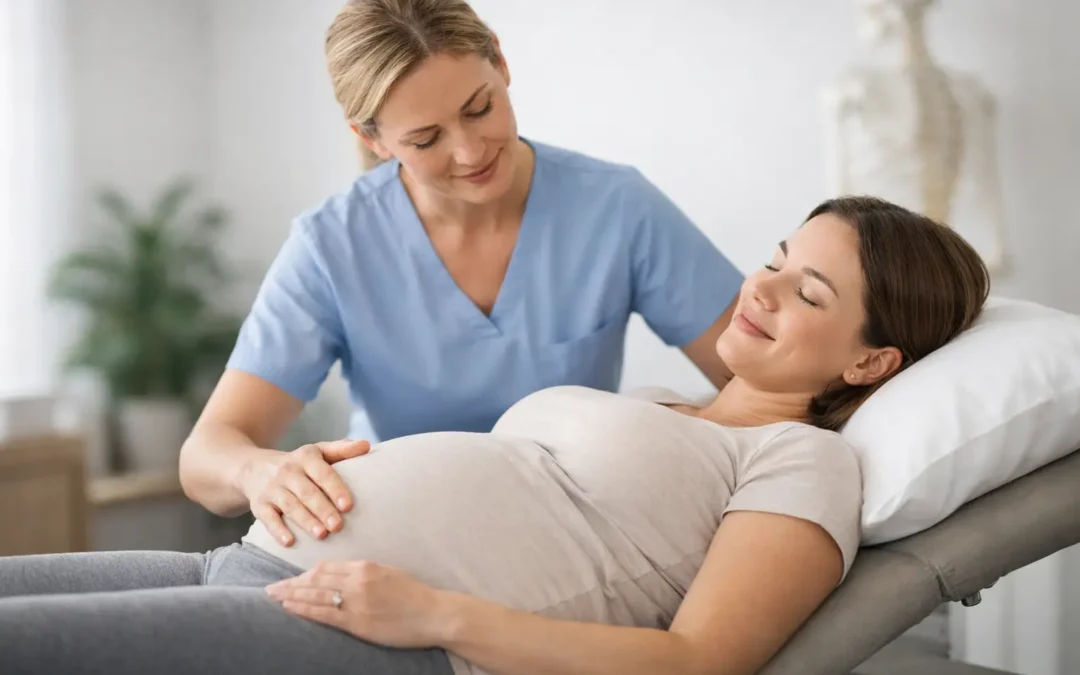
Can a Milton Osteopath Help During Pregnancy?
For many women, yes. Osteopathic manual therapy may help reduce pregnancy-related musculoskeletal discomfort by improving mobility, decreasing muscle tension, addressing movement restrictions, and supporting the body's natural adaptations to pregnancy. Treatment focuses on improving comfort and function rather than simply treating one painful area.
Important: At Osteo Difference, osteopathic treatment is not provided during the first trimester of pregnancy. Treatment may be considered during the second and third trimesters when appropriate and after reviewing your medical history and pregnancy status.
That sharp pull in your low back when you roll over in bed, the pressure across your hips after a short walk, the feeling that your body is working much harder just to get through an ordinary day - these are often the moments when people start asking about pregnancy osteopath benefits. During pregnancy, your body is not just changing quickly. It is adapting constantly, and those adaptations can place real strain on joints, muscles, posture, and circulation.
Osteopathic manual therapy offers a gentle, hands-on approach that looks at the whole picture. Rather than focusing on one painful area in isolation, it considers how your growing abdomen, shifting center of gravity, ligament changes, and daily movement patterns may all be connected. For many pregnant patients, that whole-body perspective is exactly what makes care feel more helpful and more personal.
Many expectant mothers seeking pregnancy osteopathic care in Milton are surprised to learn that discomfort is often influenced by the entire body's changing biomechanics. As the baby's growth changes posture, centre of gravity, breathing mechanics, and pelvic loading, movement restrictions may develop throughout the spine, ribs, pelvis, hips, and surrounding muscles.
What pregnancy osteopath benefits can actually include
The most meaningful pregnancy osteopath benefits are usually practical. Patients are often looking for relief from low back pain, pelvic discomfort, rib tension, neck and shoulder strain, and the general sense that movement has become harder than it used to be. Osteopathic treatment aims to improve how the body moves and functions so those everyday tasks feel less uncomfortable.
As pregnancy progresses, posture changes naturally. The rib cage may flare, the low back may work harder, and the pelvis may carry load differently from one side to the other. If one part of the body is restricted, another part often compensates. That is why someone with pelvic pressure may also have mid-back tightness, or someone with hip discomfort may start noticing more tension in the neck and shoulders.
Osteopathic manual therapy uses gentle techniques to reduce restriction, improve joint and soft tissue mobility, and support better balance through the body. The goal is not to force anything. It is to help the body adapt more comfortably to the demands of pregnancy.
Why pregnancy can create pain in more than one area
Pregnancy is often described in terms of the baby bump, but the physical changes go much further than the abdomen. Hormonal changes can increase ligament laxity. Weight distribution shifts forward. Breathing mechanics change as the diaphragm and rib cage adapt. Sleep positions change. Even walking can feel different from one trimester to the next.
These changes are normal, but normal does not always mean comfortable. If the pelvis is moving unevenly, the low back may become overworked. If the ribs are restricted, breathing can feel more effortful and the upper back may tighten. If swelling or circulation issues are present, heaviness in the legs can add to fatigue.
This is where a holistic approach matters. A practitioner who looks only at the painful spot may miss the reason that spot is under stress. Osteopathic care is often valued during pregnancy because it considers how the spine, pelvis, ribs, muscles, fascia, and circulation all influence one another.
Common symptoms osteopathic care may help during pregnancy
One of the most common reasons pregnant patients seek treatment is low back pain. As the front of the body carries more weight, the low back can become compressed and tense. Gentle manual treatment may help ease that tension and improve how the pelvis and lumbar spine move together.
Pelvic discomfort is another frequent concern. This may show up as pain around the sacroiliac joints, pubic symphysis discomfort, or a feeling of instability with walking, stairs, or turning in bed. In these cases, treatment often focuses on reducing asymmetrical strain and helping surrounding tissues work more efficiently.
Upper back, rib, and neck pain are also common, especially later in pregnancy. As posture changes and sleeping becomes more difficult, the shoulders may round forward and the upper spine may stiffen. Some patients also feel restricted through the ribs, which can make deep breathing less comfortable. Hands-on care may help free up those areas and reduce the muscular guarding that builds around them.
Some people also seek osteopathic care for sciatica-like symptoms, tension headaches, digestive discomfort related to pressure and mobility changes, or a general sense of stiffness and heaviness. Results vary by person and by cause, but the aim is always the same - improve function, reduce strain, and help the body move with less effort.
How treatment is adapted for pregnancy
Pregnant patients often worry that treatment will be too forceful. In a well-adapted session, it should not be. Pregnancy care is modified to suit the stage of pregnancy, the patient’s comfort, and any medical considerations that need to be respected.
Treatment is always modified to accommodate each stage of pregnancy. At Osteo Difference, treatment is not provided during the first trimester. During the second and third trimesters, positioning, techniques, and treatment goals are carefully adapted to maximize comfort and safety while respecting any recommendations from your obstetrician, midwife, or prenatal healthcare provider.
Positioning is one of the biggest adjustments. Treatment can be done in ways that avoid unnecessary pressure and keep you supported with pillows or side-lying positions when needed. Techniques are typically gentle, controlled, and specific. A practitioner should also ask clear questions about symptoms, trimester, activity tolerance, and any guidance you have received from your prenatal care team.
Good care during pregnancy is never one-size-fits-all. Someone with mild postural strain may need very different treatment from someone dealing with significant pelvic pain or previous injury. That individualized approach matters because the source of discomfort is not always obvious from the symptom alone.
When pregnancy osteopath benefits are most noticeable
Many patients notice the biggest changes in the parts of life that had quietly become difficult. Rolling over in bed may feel easier. Walking may feel less heavy. Sitting at work may be more tolerable. Getting up from the couch may require less bracing and less discomfort.
That kind of progress matters because pregnancy is full of repeated daily movements. Even a modest reduction in pain can improve sleep, energy, and confidence with movement. And when the body is working more efficiently, patients often feel less worn down by ordinary tasks.
Still, it helps to be realistic. Osteopathic care is not a guarantee that every symptom will disappear. Some discomfort is part of the physical demands of pregnancy, and results can depend on factors like trimester, activity level, prior injuries, and how long the issue has been building. Often the goal is meaningful improvement, not perfection.
What to expect from a thoughtful first visit
A good first appointment should feel thorough and calm. You should have space to explain what you are feeling, when it started, what makes it worse, and how it is affecting your day. That conversation matters because treatment is stronger when it is based on your actual experience, not just a label like back pain or pelvic pain.
At Osteo Difference, many patients seeking pregnancy osteopathic care come from Milton, Georgetown, Acton, Halton Hills, Campbellville, Oakville, Burlington, and surrounding communities. Every assessment is individualized because each pregnancy, medical history, and pattern of discomfort is unique.
Assessment usually looks at posture, mobility, areas of tension, and how different parts of the body may be contributing to the problem. From there, treatment is tailored to your comfort and stage of pregnancy. A practitioner may also suggest simple ways to reduce strain between visits, such as changes to sleep support, sitting setup, movement habits, or pacing during the day.
At a clinic like Osteo Difference, that whole-person approach is central to care. The focus is not simply on where it hurts, but on why your body may be under strain and what can help it function better over time.
Is osteopathic care right for every pregnant patient?
Not always, and that is part of giving honest guidance. Some symptoms need prompt medical evaluation rather than manual treatment. Severe swelling, sudden headaches, bleeding, reduced fetal movement, or other urgent changes should be discussed with your prenatal medical provider right away. Osteopathic care works best when it is part of a responsible care plan, not a substitute for necessary medical assessment.
For many uncomplicated musculoskeletal complaints, though, it can be a very supportive option. It is especially appealing to patients who want a non-invasive, hands-on approach that respects the body’s changes and aims for real relief from pain without simply masking symptoms.
Pregnancy asks a lot from your body in a short period of time. If movement has become harder, pain is affecting your day, or you feel like your body is compensating in ways it cannot sustain, gentle osteopathic care may offer the kind of support that helps you feel more comfortable, more mobile, and more at ease in your own body as it continues to change.
Frequently Asked Questions About Pregnancy Osteopathy
Can a Milton Osteopath treat pregnancy-related back pain?
Many pregnancy-related musculoskeletal complaints, including low back pain, pelvic discomfort, rib pain, neck tension, and posture-related strain, may benefit from osteopathic manual therapy during the second and third trimesters.
Is osteopathic treatment safe during pregnancy?
Treatment is modified specifically for pregnancy and uses gentle techniques. At Osteo Difference, treatment is not provided during the first trimester. During later stages of pregnancy, care is adapted to your comfort, stage of pregnancy, and overall health.
Can osteopathy help pelvic girdle pain?
Many women experiencing pregnancy-related pelvic girdle discomfort may benefit from treatment that improves movement, reduces muscular tension, and addresses mechanical strain.
How many treatments are usually recommended?
Treatment frequency depends on your symptoms, stage of pregnancy, activity level, and how your body responds to care.
When should I contact my prenatal healthcare provider instead of seeking manual treatment?
Seek immediate medical assessment if you experience vaginal bleeding, severe abdominal pain, sudden swelling, severe headaches, visual disturbances, reduced fetal movement, fluid leakage, contractions outside expected labour, or any symptoms your prenatal healthcare provider has advised require urgent attention.
Key Takeaways
- Pregnancy changes posture, movement, breathing mechanics, and load distribution throughout the body.
- Osteopathic manual therapy focuses on improving mobility and reducing mechanical strain.
- Treatment is individualized and adapted for each stage of pregnancy.
- At Osteo Difference, osteopathic treatment is not performed during the first trimester.
- Many women seek a Milton Osteopath for pregnancy-related low back pain, pelvic discomfort, rib pain, neck tension, and posture-related symptoms.
- Treatment complements — but does not replace — routine prenatal medical care.
If you are looking for a Milton Osteopath for pregnancy-related back pain, pelvic discomfort, rib pain, neck tension, posture changes, or movement-related discomfort during pregnancy, a comprehensive assessment may help identify the factors contributing to your symptoms. Patients from Milton, Georgetown, Acton, Halton Hills, Campbellville, Oakville, Burlington, and surrounding communities often seek gentle osteopathic care during the second and third trimesters to support comfort, mobility, and everyday function.