
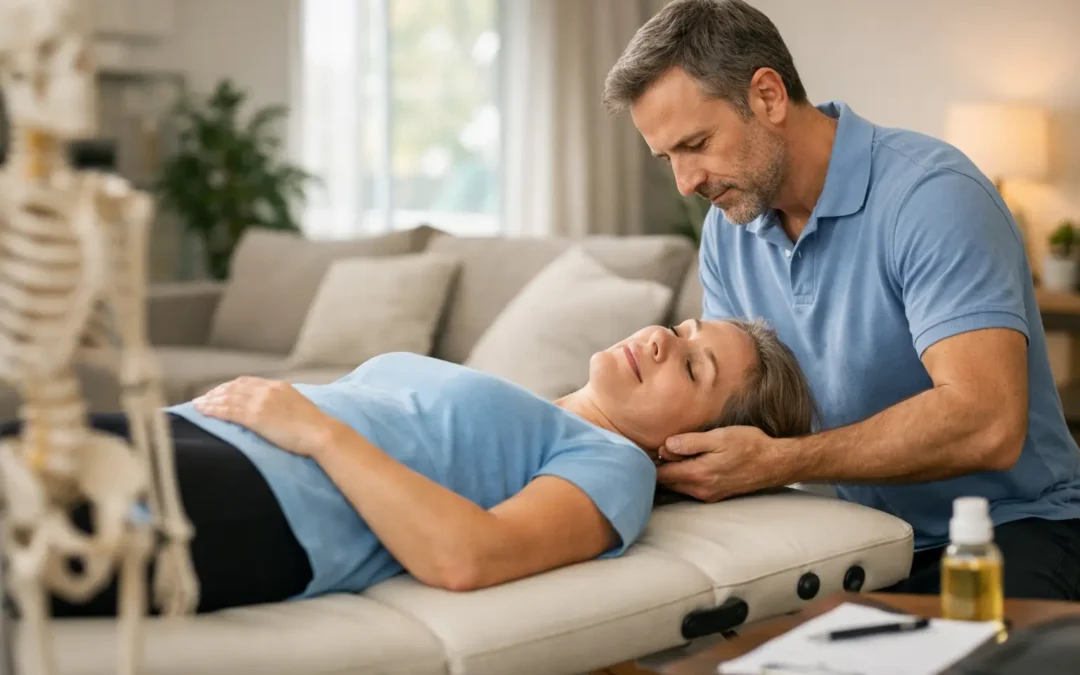
Some people put off care because getting to the appointment feels harder than the treatment itself. If you are dealing with sharp back pain, recovering from an injury, managing pregnancy-related discomfort, or helping an older parent with limited mobility, in home osteopathic treatment can remove one of the biggest barriers to getting help.
That convenience matters, but it is not the only reason people choose home visits. For the right person, treatment at home can make care feel calmer, more practical, and more connected to daily life. It also gives your practitioner a clearer view of the physical habits and movement patterns that may be contributing to pain in the first place.
In-home osteopathic treatment is currently available on weekends only and is offered exclusively within Milton, Ontario. Weekend home visits are designed for patients who have difficulty travelling to the clinic because of pain, limited mobility, pregnancy, postpartum recovery, or other musculoskeletal concerns.
What in home osteopathic treatment actually offers
Osteopathic manual treatment focuses on how the body’s structure and function affect each other. When joints are not moving well, muscles are overworking, posture is under strain, or circulation and tissue mobility are restricted, the body often starts compensating. That is when pain, stiffness, headaches, tension, and recurring flare-ups tend to show up.
In home osteopathic treatment brings that same hands-on, whole-body approach into your own space. The goal is still to identify the root cause of discomfort, improve mobility, reduce strain, and help the body function more efficiently. The setting changes, but the principles do not.
For many patients, home care is especially helpful because treatment is happening where real-life stress on the body occurs. A practitioner may notice how you sit at your desk, how you get up from the couch, how your sleep setup affects your neck, or how stairs and household routines aggravate hip, knee, or low back pain. Those details often matter more than people realize.
When home visits make the most sense
Home treatment is not just for people who cannot leave the house. It can also be the better choice during certain stages of pain, recovery, or life.
A person with acute low back pain may find car rides miserable. Someone with sciatica may tolerate short periods of standing but struggle with getting in and out of a vehicle. A senior with balance concerns may feel safer being assessed and treated in familiar surroundings. A new parent may simply need care that fits around feeding schedules, sleep disruption, and the physical demands of carrying and lifting.
It can also be a strong option for people with chronic tension patterns. Desk workers, for example, often develop recurring neck pain, shoulder tightness, jaw tension, and headaches that are closely tied to their workstation and daily habits. Seeing that environment first-hand can support better recommendations than a generic posture conversation ever could.
Athletes and active adults sometimes benefit for a different reason. When a training schedule is tight, travel time becomes one more obstacle. A home visit can make it easier to get assessed early, before a manageable issue turns into a longer recovery.
What to expect during an in home osteopathic treatment visit
People are often surprised by how straightforward a home appointment feels. You do not need a perfect house, a dedicated treatment room, or a complicated setup. In most cases, a quiet area with enough room to move comfortably is enough.
The visit usually begins the same way an in-clinic appointment would. Your practitioner asks about your symptoms, health history, daily activities, injuries, and goals. They may also ask how the issue affects your work, sleep, exercise, or ability to care for your family. That conversation matters because osteopathic treatment looks at the whole picture, not just the sore spot.
Assessment comes next. This may include observing posture, gait, breathing patterns, range of motion, and how different parts of the body are working together. Treatment itself is hands-on and tailored to your needs. Techniques may be gentle or more direct depending on the condition, your comfort level, and how your body responds.
A good home visit should still feel professional, focused, and individualized. The setting may be more familiar, but the clinical reasoning behind the treatment remains the same.
The benefits of being treated at home
The most obvious benefit is convenience, but the deeper value is often reduced strain. If travel increases your pain, drains your energy, or adds stress to an already difficult day, removing that step can help you start care sooner and stick with it more consistently.
There is also a comfort factor that should not be dismissed. Some patients relax more easily at home, and that can matter during manual treatment. When the nervous system is less guarded, tissues often respond better, movement can improve more smoothly, and the person receiving care may find it easier to notice what actually changes.
Home visits can also support more realistic guidance. Rather than giving broad advice about posture, lifting, sleeping, or movement breaks, your practitioner can tailor suggestions to your actual environment. A small adjustment to desk height, chair support, baby-carrying habits, or how you move through your kitchen may have more impact than a generic stretch sheet.
For families, there is practical value too. Coordinating care around children, older relatives, or work demands is not always simple. Having treatment come to you can make it possible to get help without turning the entire day upside down.
The trade-offs to consider
Home care is helpful, but it is not automatically the best fit for every situation. Some people prefer the clear separation of going to a clinic, where the environment is fully set up for assessment and treatment. Others find it easier to focus when they are away from household distractions.
There are also cases where in-clinic care may offer logistical advantages, especially if more space is needed or if a patient’s condition is easier to assess in a more controlled environment. It depends on the person, the condition, and what kind of support will lead to the best outcome.
Cost and scheduling can be factors as well. Home visits often involve additional travel time and planning. If convenience is essential, that may be well worth it. If not, a clinic appointment may be the more practical option.
The key is not whether home care is better in general. It is whether it is better for you, right now.
Who often benefits most from in-home osteopathic treatment
Several groups tend to benefit especially well from this kind of care. Seniors with mobility limits often appreciate the safety and ease of staying in a familiar space. Pregnant and postpartum patients may find that home visits reduce physical strain during a time when the body is already adapting quickly.
People recovering from sports injuries, flare-ups of back or neck pain, or surgery-related stiffness may prefer not to add travel stress while healing. Parents seeking care for themselves or family members may also find that home appointments make treatment more accessible and consistent.
This approach can be particularly meaningful for people who have delayed treatment because life feels too busy or pain makes leaving home difficult. In those cases, access is not a luxury. It is part of what makes recovery possible.
Choosing a provider for home-based care
If you are considering this option, look for a practitioner who does more than offer convenience. You want someone who listens carefully, explains clearly, and adapts treatment to your body and your goals. The setting should never replace clinical quality.
Ask how the visit is structured, what conditions they commonly treat, and whether home treatment is appropriate for your situation. A thoughtful practitioner will be honest about when a home visit makes sense and when in-clinic care may be the better route.
That balanced approach matters. Good care is not about forcing one format to fit everyone. It is about choosing the setting that gives you the best chance at real relief from pain, better movement, and lasting improvement.
For some patients, receiving treatment at home makes osteopathic care more accessible and less physically demanding. Osteo Difference currently provides in-home osteopathic treatment on weekends only and exclusively within Milton, Ontario. If travelling to the clinic is difficult because of back pain, neck pain, sciatica, pregnancy-related discomfort, limited mobility, or another musculoskeletal condition, weekend home visits may provide a convenient way to receive personalized, whole-body osteopathic care in the comfort of your home.
Who Is In-Home Osteopathic Treatment Best For?
In-home osteopathic treatment may be appropriate for:
- Seniors with limited mobility
- Patients with acute back pain or sciatica
- Pregnancy and postpartum patients
- Individuals recovering from sports injuries
- Patients recovering after surgery (when medically cleared)
- Anyone whose pain makes travelling to the clinic difficult
Treatment is always individualized after a thorough assessment.
Frequently Asked Questions About In-Home Osteopathic Treatment
Who benefits most from in-home osteopathic treatment?
Home visits are often helpful for seniors, individuals with limited mobility, patients recovering from injury, pregnancy and postpartum patients, and anyone whose pain makes travelling difficult.
Can a Milton Osteopath treat me at home?
Yes. Depending on availability and service area, in-home osteopathic treatment may be available throughout Milton and neighbouring communities.
Is treatment different than visiting a clinic?
The assessment and treatment principles remain the same. The main advantage is that your practitioner can observe how your daily environment may be contributing to pain and movement dysfunction.
What conditions can be treated during a home visit?
Many patients seek home treatment for back pain, neck pain, sciatica, arthritis, sports injuries, pregnancy-related discomfort, headaches, mobility restrictions, and general musculoskeletal pain.
Do I need special equipment?
No. Most treatments only require a safe space with enough room for the practitioner to work comfortably.
Key Takeaways
- In-home osteopathic treatment is available on weekends only.
- Home visits are offered exclusively within Milton, Ontario.
- Treatment follows the same evidence-informed, whole-body assessment used during clinic visits.
- Home assessments allow your osteopath to evaluate movement, posture, and ergonomics in your everyday environment.