
Can a Milton Osteopath Help After Pregnancy?
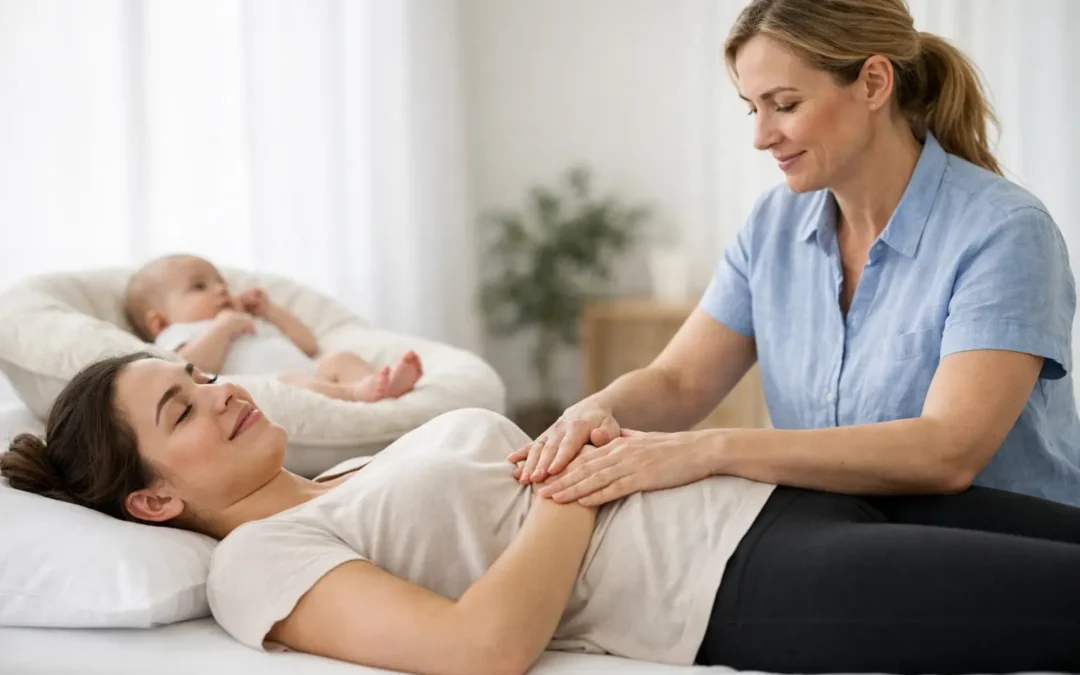
Yes. Postpartum osteopathic care may help relieve musculoskeletal discomfort that develops after pregnancy and childbirth by improving mobility, reducing muscle tension, restoring joint movement, and addressing the movement patterns that change during pregnancy, labour, and caring for a newborn.
Whether you delivered vaginally or by Cesarean section, treatment is always adapted to your stage of healing, comfort level, and medical clearance.
The first weeks after birth can feel physically unfamiliar in ways many new parents do not expect. You may be overjoyed, exhausted, sore, and carrying a baby for hours each day while your body is still trying to recover. Postpartum osteopathic care is often helpful in this stage because it looks beyond one painful area and considers how pregnancy, labor, feeding positions, sleep loss, and daily lifting all affect the body together.
Many new mothers seeking postpartum osteopathic care in Milton are surprised to learn that discomfort after childbirth often comes from several areas working together. Pregnancy changes posture, breathing mechanics, pelvic alignment, core function, and movement patterns, while caring for a newborn introduces repetitive lifting, feeding positions, carrying, and sleep deprivation that place additional demands on the body.
For some people, the main issue is low back pain. For others, it is pelvic discomfort, rib tension, neck strain, headaches, or a sense that their body just does not move the way it used to. These symptoms are common, but common does not mean you have to push through them without support. Gentle hands-on care can play a meaningful role in helping the body recover more comfortably and more efficiently.
What postpartum osteopathic care focuses on
After birth, the body is not simply returning to its pre-pregnancy state. Muscles, fascia, joints, breathing mechanics, posture, circulation, and core support all have to adapt again. If the pregnancy was physically demanding, if labor was long, or if a cesarean birth was part of the experience, those adaptations can be more noticeable.
Postpartum osteopathic care focuses on how the whole body is functioning. Instead of looking only at where pain is felt, an osteopathic manual practitioner assesses how different areas may be contributing to strain. A sore neck, for example, may be tied to feeding posture, rib restriction, upper back tension, and reduced core support. Pelvic discomfort may connect to lumbar mechanics, hip balance, scar restrictions, or how weight is being transferred during walking and lifting.
This whole-body perspective matters in the postpartum period because symptoms rarely exist in isolation. The body is compensating constantly, and those compensation patterns can become more entrenched when sleep is limited and physical demands are high.
Common reasons new parents seek care
Some postpartum concerns are obvious right away, while others build gradually over several weeks. Often, people wait because they assume discomfort is just part of recovery. In reality, ongoing pain or restricted movement deserves attention.
Many new parents seek treatment for low back pain, pelvic tension, hip discomfort, tailbone pain, rib pain, shoulder tightness, neck strain, headaches, and wrist or forearm tension from feeding and carrying. Some also notice abdominal tightness, a sense of weakness through the core, or discomfort around a cesarean scar once healing has progressed and they have medical clearance for treatment.
Many postpartum complaints are mechanical rather than structural. Muscle tension, joint stiffness, altered posture, reduced core coordination, scar tissue restrictions, and movement compensation may all contribute to persistent discomfort during everyday activities such as feeding, lifting, carrying, walking, or getting out of bed.
There are also less obvious issues that can benefit from a structural and functional assessment. Shallow breathing, a persistent feeling of tension through the chest, poor posture, and a general sense of physical fatigue can all be connected to how the body adapted during pregnancy and birth. When movement is restricted, everyday tasks tend to feel harder than they should.
How treatment may support postpartum recovery
The goal is not to force the body back into place. Good osteopathic care is gentle, specific, and responsive to the patient in front of you. In the postpartum period, that matters even more. Tissues may still be sensitive, energy levels may be low, and treatment should respect that.
Manual osteopathic treatment may help reduce joint restriction, ease muscle tension, improve mobility, and support better circulation and lymphatic flow. It can also help the body move with less compensation, which often means less strain during feeding, lifting, carrying, and getting in and out of bed.
For someone with pelvic or low back pain, treatment may focus on balancing the pelvis, hips, sacrum, and lumbar spine while also addressing rib cage and abdominal mechanics. For someone with neck and shoulder pain, the work may include the upper back, ribs, diaphragm, jaw, and posture patterns that developed during feeding or contact naps. If there is scar tissue from a cesarean birth, treatment may eventually include gentle work around surrounding restrictions, but only when healing is appropriate and the patient has been cleared.
It depends on the person, their birth experience, and how their symptoms are showing up. Two parents may both say they have back pain, yet the reasons behind that pain can be very different. That is why individualized care matters.
When to consider postpartum osteopathic care
There is no single perfect timeline. Some people benefit from care within the early weeks after delivery, while others come in months later when they realize pain is not resolving on its own. The right timing depends on medical guidance, the type of birth, tissue healing, symptom severity, and overall comfort.
Treatment timing should always follow the recommendations of your obstetrician, midwife, or primary healthcare provider. Following a Cesarean birth, scar treatment should only begin once appropriate healing has occurred and medical clearance has been given.
If you are dealing with persistent discomfort, difficulty moving comfortably, or growing tension that is affecting daily function, it may be worth getting assessed. Early support can sometimes prevent small dysfunctions from becoming longer-term patterns. At the same time, later care can still be valuable. Even if your baby is several months old, your body can benefit from treatment that addresses unresolved strain.
That said, osteopathic care is not a replacement for postpartum medical care. If you have signs of infection, heavy bleeding, fever, severe swelling, chest pain, sudden shortness of breath, or other urgent symptoms, medical evaluation comes first. Osteopathic treatment works best as part of a broader recovery picture, not instead of essential medical support.
What a postpartum osteopathic visit may feel like
Many new parents are understandably cautious about hands-on treatment after birth. They want relief, but they also want to know treatment will be safe, respectful, and tailored to how they are feeling that day.
A good visit starts with listening. Your practitioner should want to understand your pregnancy, labor or cesarean experience, current symptoms, feeding posture, sleep setup, movement challenges, and recovery goals. That conversation helps shape the treatment plan.
At Osteo Difference, many patients seeking postpartum osteopathic care come from Milton, Acton, Halton Hills, Campbellville, and Georgetown. Every assessment is individualized because every pregnancy, delivery, and recovery experience is different.
Assessment is usually gentle and focused on how your body is moving and where restrictions may be contributing to discomfort. Treatment itself often involves light manual techniques designed to improve mobility and reduce strain, not aggressive force. Many patients describe it as calming, though the exact experience depends on what the body needs.
In a clinic that looks at the whole picture, the session may also include practical guidance on posture, lifting patterns, positioning, and ways to reduce repetitive strain at home. That matters because even effective treatment has to work alongside real life. If you are feeding every few hours and carrying an infant most of the day, those demands need to be part of the plan.
Why whole-body care matters after birth
Postpartum recovery is often discussed in narrow terms, usually around pelvic floor healing or core strength. Those are important, but they are only part of the story. The rib cage, diaphragm, spine, pelvis, hips, jaw, shoulders, and even feet can all influence how well the body recovers and functions after birth.
When one area is not moving well, another area usually compensates. That is often why symptoms linger. A parent may feel pain in the shoulders, but the deeper issue may involve thoracic stiffness and breathing mechanics. Another may feel pelvic heaviness, but the body may also be struggling with hip imbalance, abdominal tension, and reduced spinal mobility.
This is where a holistic approach can be especially useful. Instead of chasing symptoms one by one, it looks for the patterns connecting them. For many postpartum patients, that leads to more meaningful progress because treatment is based on how the body is functioning as a system.
For families in Milton and nearby communities, this kind of personalized care can make a real difference when recovery feels slower or more uncomfortable than expected. At Osteo Difference, the focus is on listening carefully, treating gently, and helping patients find real relief from pain while supporting long-term healing.
The postpartum period places significant physical demands on the body while recovery is still taking place. If pain, stiffness, or movement limitations are making everyday activities more difficult, a comprehensive assessment may help identify the factors contributing to your symptoms. If you are looking for a Milton Osteopath for postpartum recovery, back pain, pelvic discomfort, neck tension, headaches, or movement-related pain after childbirth, patients from Milton, Oakville, Acton, Halton Hills, Georgetown, and Campbellville often seek personalized osteopathic care focused on improving comfort, mobility, and long-term function.
Frequently Asked Questions About Postpartum Osteopathic Care
Can a Milton Osteopath help after pregnancy?
Many women seek osteopathic treatment for postpartum back pain, pelvic discomfort, neck pain, shoulder tension, rib pain, headaches, and movement-related discomfort after childbirth.
When can I start osteopathic treatment after giving birth?
The timing depends on your delivery, medical history, healing progress, and clearance from your healthcare provider. Treatment is always adapted to your stage of recovery.
Can osteopathy help after a Cesarean section?
Yes, once healing is appropriate and your healthcare provider has cleared you for treatment. Care may help improve mobility, reduce muscular compensation, and eventually address scar tissue restrictions when clinically appropriate.
Can treatment help with breastfeeding-related neck and shoulder pain?
Many new mothers develop neck, upper back, rib, wrist, and shoulder discomfort from prolonged feeding positions and carrying their baby. Treatment often focuses on reducing these mechanical strains.
Is postpartum osteopathic treatment gentle?
Yes. Treatment is modified according to your comfort, tissue healing, and overall recovery.
Key Takeaways
- Pregnancy and childbirth change posture, movement patterns, breathing mechanics, and load distribution.
- Osteopathic manual therapy focuses on improving movement, reducing muscle tension, and restoring function.
- Treatment is individualized based on your pregnancy, delivery, healing stage, and daily activities.
- Many new mothers seek a Milton Osteopath for postpartum back pain, pelvic pain, neck tension, headaches, rib discomfort, and Cesarean recovery.
- Osteopathic care complements — but does not replace — routine postpartum medical care.