
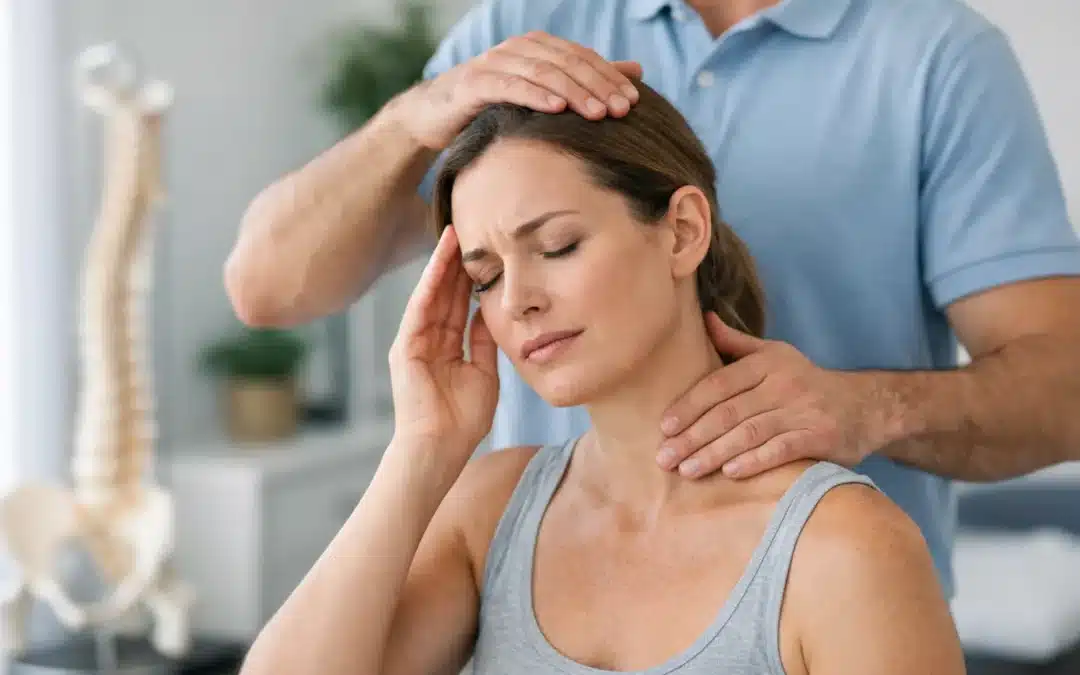
A headache that starts at the base of the skull after a long day at the computer feels different from a migraine that builds with light sensitivity and nausea. That difference matters. Manual therapy for headaches is not about chasing pain wherever it shows up. It is about understanding why the pain is happening in the first place and whether muscles, joints, posture, jaw tension, or nerve irritation are part of the pattern.
Many people seeking headache treatment in Milton are surprised to learn that the source of their headaches may not be located in the head itself. Neck stiffness, jaw tension (TMJ dysfunction), poor posture, shoulder tightness, upper back restrictions, prolonged desk work, and movement dysfunction can all contribute to recurring headaches.
For many people, headaches are not just a head problem. Tight neck muscles, restricted upper back movement, a stressed jaw, poor workstation setup, old injuries, and even breathing habits can all add strain to the system. When treatment looks at the whole picture, it often becomes easier to reduce the frequency and intensity of headaches instead of relying only on short-term symptom control.
Looking Beyond the Headache
My background in engineering has influenced how I assess movement and compensation patterns. Rather than focusing only on where pain is felt, I evaluate how the neck, jaw, upper back, rib cage, shoulders, breathing mechanics, and posture work together.
Many headaches behave more like movement problems than isolated pain problems. The head may be where symptoms appear, but the contributing factors often involve the cervical spine, thoracic spine, jaw mechanics, muscle tension, or repetitive postural strain. Understanding these relationships helps guide a more individualized treatment plan.
When manual therapy for headaches makes sense
Manual therapy can be especially helpful when headaches seem connected to tension, posture, neck stiffness, or jaw dysfunction. A person who wakes with a headache after clenching at night may need a different approach than someone whose pain flares after lifting weights or spending hours driving. The goal is not to put every headache into the same category. The goal is to identify the mechanical and functional factors that may be contributing.
Tension-type headaches are one common example. These often feel like pressure, tightness, or a band around the head. In many cases, the muscles of the neck, shoulders, scalp, and jaw are overworking. The joints of the upper neck may also lose mobility, which can change how stress is distributed through the head and cervical spine.
Cervicogenic headaches are another pattern that often responds well to hands-on care. These headaches usually come from the neck, even if the pain is felt in the head, around the eye, or behind one side of the skull. They may be aggravated by looking down for long periods, sleeping awkwardly, or turning the head.
Migraines are more complex. They involve neurological and vascular factors, and manual therapy is not a cure. Still, some people with migraines also have neck tension, jaw restriction, or postural strain that can act as triggers or amplify symptoms. In those cases, treatment may help lower the physical stress load on the body, which can support better overall management.
What manual therapy is actually doing
Hands-on treatment is often misunderstood as simple muscle rubbing or temporary relaxation. Effective manual therapy is more specific than that. It uses assessment and targeted techniques to improve how tissues move, how joints articulate, and how strain is shared across the body.
If the upper neck is restricted, nearby muscles may tighten to compensate. If the jaw is not moving well, the temples and side of the head may become overloaded. If the rib cage is stiff and breathing is shallow, the neck may end up doing work it was never meant to do. Manual therapy addresses these relationships directly.
Depending on the person, treatment may include gentle joint mobilization, soft tissue work, myofascial release, suboccipital decompression, TMJ-focused treatment, and techniques that improve movement through the neck, upper back, shoulders, and rib cage. In osteopathic care, the focus is broader than one painful spot. The body is treated as a connected system, and that matters with headaches because the source is often not where the pain is felt most strongly.
This whole-body approach can also improve circulation, reduce protective muscle guarding, and restore more efficient movement. When the body is not fighting against restriction all day, symptoms often become less frequent or less intense over time.
Why posture and daily habits matter so much
A surprising number of headaches build slowly from repetition. Hours spent leaning toward a screen, carrying stress in the shoulders, clenching the jaw during work, or sleeping without proper support can all create strain that accumulates day after day.
That does not mean posture needs to be perfect. It means the body needs variety, mobility, and enough support to avoid getting stuck in one pattern. Someone with forward head posture and a locked upper back may keep overloading the same muscles at the base of the skull. Someone else may hold tension through the jaw without realizing it until headaches become routine.
This is why treatment alone is rarely the entire answer. Good care also includes education. Patients tend to do better when they understand what is driving their headaches and what small changes may help between visits. That might mean adjusting screen height, changing pillow position, improving breathing mechanics, or taking brief movement breaks during the workday.
What to expect from an assessment
A careful assessment should never begin and end with the question, Where does it hurt? Headaches need context. A practitioner should ask when they started, how often they happen, what they feel like, what makes them worse, and whether there are associated symptoms such as nausea, dizziness, vision changes, sinus pressure, or jaw pain.
Physical assessment often includes the neck, upper back, shoulders, jaw, and posture. Range of motion, muscle tone, joint mobility, and movement habits can reveal a lot. If a headache is repeatedly triggered by turning the head, working at a desk, or clenching the teeth, those details help shape treatment.
At Osteo Difference, many patients seeking headache treatment come from Milton, Georgetown, Acton, Halton Hills, Campbellville, and surrounding communities. Although headache symptoms may appear similar, identifying the individual mechanical contributors is an essential part of developing an effective treatment plan
At a clinic like Osteo Difference, this kind of assessment supports a more personalized plan. Some people need focused neck and upper thoracic treatment. Others need a more blended approach that includes TMJ care, postural retraining, and guidance for daily habits. The point is to treat the person in front of you, not just the diagnosis on paper.
The trade-offs and limits of manual therapy for headaches
Manual therapy can be very effective, but it is not the right fit for every headache and it should never replace proper medical evaluation when red flags are present. Sudden severe headache, headache after a head injury, changes in speech, weakness, fainting, fever, unexplained neurological symptoms, or a significant shift in headache pattern all need prompt medical attention.
Even when a headache is musculoskeletal, results can vary. Some people feel noticeable relief after one or two visits, especially if the issue is driven by recent tension or a clear mechanical trigger. Others have a longer history, multiple contributing factors, high stress, poor sleep, or migraine involvement. In those cases, progress may be more gradual.
There is also a practical trade-off to understand. Hands-on care can reduce restriction and calm irritated tissues, but if the same stressors continue unchecked, symptoms may return. That is not a failure of treatment. It usually means the body needs both direct care and better support from daily routines.
Who often benefits most
People with desk-related strain, recurring neck tension, jaw clenching, sports-related overuse, and posture-driven headaches are often good candidates for manual therapy. It can also be a helpful option for adults who want a non-invasive approach and prefer care that looks beyond medication alone.
People working long hours at a computer, healthcare professionals, tradespeople, students, drivers, parents, and active adults commonly experience headaches associated with prolonged postures, repetitive strain, or muscle tension. Understanding these daily demands is an important part of developing an individualized treatment plan.
Parents balancing stress and poor sleep, active adults recovering from shoulder or neck strain, and seniors managing stiffness may all experience headaches for different reasons. That is where individualized care becomes important. The same symptom can come from very different patterns in the body.
For families in Milton and nearby communities, having access to personalized hands-on care can make it easier to address these issues early, before headaches become a constant part of the week.
How to get better results between appointments
The best outcomes usually come from a combination of treatment and consistency at home. Small changes matter more than extreme ones. Gentle neck mobility, regular posture changes, jaw relaxation, hydration, stress management, and sleep support can all reduce the load on sensitive tissues.
It also helps to notice patterns instead of pushing through them. If headaches always build after laptop work, long drives, or intense workouts, that information is useful. The more clearly triggers are identified, the easier it becomes to make treatment more precise and prevention more realistic.
Relief from headaches is rarely about forcing the body into submission. More often, it comes from listening carefully to what the body is compensating for, then restoring the mobility, balance, and support it has been missing. That is where manual therapy can make a meaningful difference - not by masking symptoms, but by helping the body work better overall.
If you are looking for a Milton Osteopath for headaches, neck pain, TMJ dysfunction, posture-related headaches, or recurring muscle tension, a comprehensive assessment may help identify the factors contributing to your symptoms. Patients from Milton, Oakville, Burlington, Halton Hills, Campbellville, and nearby communities often seek care when they want a non-invasive approach focused on improving movement, reducing pain, and supporting long-term function.
Frequently Asked Questions About Manual Therapy for Headaches
Can a Milton Osteopath help headaches?
Many tension headaches and cervicogenic headaches may benefit from osteopathic manual therapy. Treatment focuses on improving movement, reducing muscular tension, and addressing contributing mechanical factors.
Can osteopathy help migraines?
Migraines are neurological conditions and require appropriate medical management. However, osteopathic treatment may help reduce contributing neck tension, jaw dysfunction, and movement restrictions that can aggravate symptoms in some individuals.
Can TMJ dysfunction cause headaches?
Yes. Jaw tension and temporomandibular joint dysfunction may contribute to headaches, facial pain, neck discomfort, and muscle tension.
Is treatment painful?
Treatment is typically gentle and adapted to your comfort level. Techniques are selected according to your symptoms and clinical findings.
When should I seek medical attention for a headache?
Seek immediate medical attention if you experience a sudden severe headache, neurological symptoms, weakness, speech changes, confusion, fever, head trauma, or a significant change in your usual headache pattern.
Key Takeaways
- Not all headaches have the same cause.
- Tension headaches and cervicogenic headaches are frequently associated with movement dysfunction.
- Neck mobility, jaw function, posture, breathing mechanics, and upper back movement may all influence headache patterns.
- Osteopathic manual therapy focuses on improving movement rather than simply masking pain.
- Treatment is individualized based on assessment findings.
- Many people seek a Milton Osteopath for recurring headaches, neck pain, jaw tension, and posture-related discomfort.