
Can a Milton Osteopath Help Improve Posture?
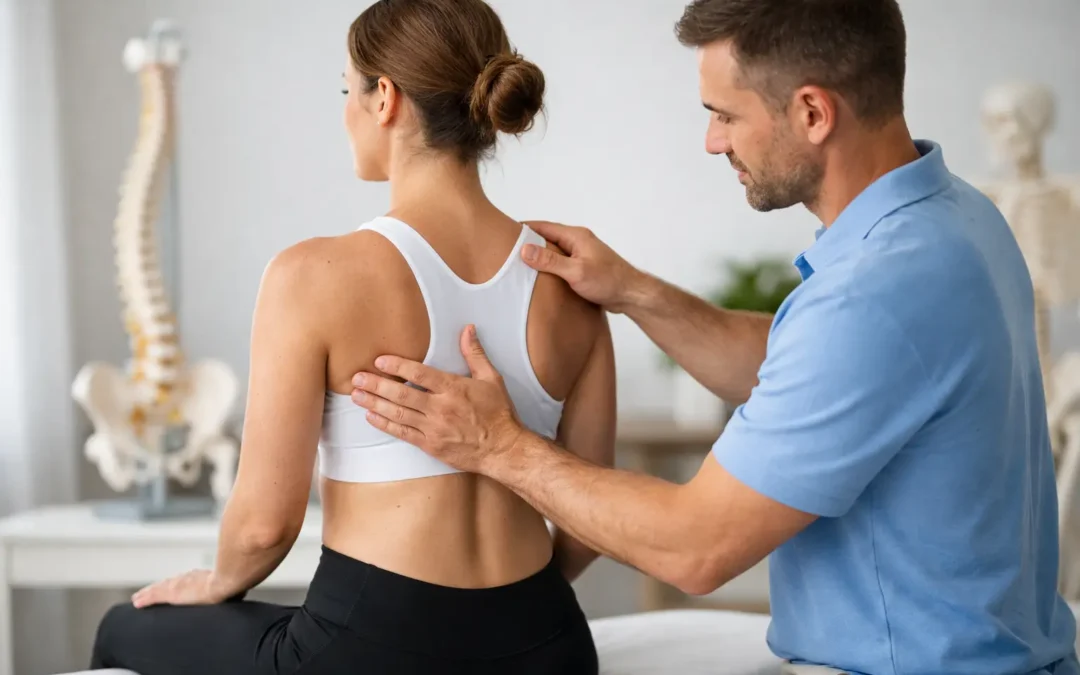
Yes. Osteopathic manual therapy may help improve posture by addressing movement restrictions, muscle tension, joint mobility, breathing mechanics, and compensation patterns that contribute to postural strain. Rather than forcing the body into a specific position, a Milton Osteopath focuses on improving how the body functions so better posture can develop more naturally. You notice it at the end of the workday first. Your shoulders creep forward, your neck feels tight, and sitting up straight starts to feel like effort instead of something natural. That is often where questions about how osteopathy helps posture begin - not with appearance, but with discomfort, fatigue, and the sense that your body is working harder than it should.
Posture is often treated like a willpower problem. People are told to sit taller, pull their shoulders back, and be more aware of how they stand. Awareness can help, but posture is rarely just about habit. It is usually shaped by a mix of muscle tension, joint restriction, old injuries, repetitive movement, stress, work setup, and the way the body has adapted over time. Many people seeking posture-related treatment in Milton are surprised to learn that posture is often connected to more than sitting habits. Neck pain, headaches, shoulder tension, breathing restrictions, lower back pain, stress, and movement dysfunction can all influence how the body positions itself throughout the day.
That is why osteopathy looks at the whole picture. Instead of forcing the body into a more upright position, osteopathic treatment focuses on why your posture changed in the first place and what is keeping it there.
Looking Beyond Posture
My background in engineering has influenced how I assess movement and compensation patterns. Rather than focusing only on how posture looks, I look at how the body functions as a system and whether restrictions elsewhere are contributing to discomfort and inefficient movement.
In many cases, posture is not the primary problem. It is the result of underlying movement dysfunction, joint restriction, muscular imbalance, previous injuries, repetitive stress, or adaptation to daily demands. Understanding these relationships often leads to more meaningful and lasting improvements.
How osteopathy helps posture in a practical way
Osteopathy helps posture by improving how the body moves and balances itself. When certain joints are restricted and certain muscles are overworking, the body starts to compensate. You may lean slightly to one side, hold your head forward, lock your knees, or tighten through your lower back just to stay comfortable.
Poor posture is often associated with movement dysfunction. When one area loses mobility, another area frequently compensates. Over time, these compensations may contribute to neck pain, headaches, shoulder discomfort, lower back pain, and fatigue. Addressing these movement patterns is often more effective than simply trying to maintain a more upright posture through conscious effort alone.
Those patterns are not random. They are the body’s way of adapting to strain.
A manual osteopath assesses how different areas are working together, including the spine, rib cage, pelvis, shoulders, neck, and hips. If your upper back is stiff, for example, your neck may begin to overwork. If your pelvis is not moving well, your lower back may take on extra load. If your diaphragm and rib cage are restricted, you may develop tension through your chest and shoulders that affects how you sit and stand.
By using gentle hands-on treatment, osteopathy can reduce areas of restriction, ease excess tension, and help the body return to a more efficient position. Better posture often follows because the body no longer has to fight against the same mechanical stress.
Posture is about function, not posing
One of the biggest misunderstandings about posture is the idea that there is one perfect position. In reality, healthy posture is less about holding a rigid shape and more about being able to move, adapt, and support yourself without strain.
A person can look upright and still have pain. Another person may not appear perfectly straight but functions well and feels comfortable. That is why posture should not be judged by appearance alone.
Osteopathy treats posture as part of whole-body function. The goal is not to force symmetry where the body does not naturally have it. The goal is to improve alignment, mobility, and muscular balance so that everyday activities feel easier. When your body moves well, posture usually improves in a way that feels sustainable rather than forced.
Common reasons posture starts to change
For some people, posture issues build slowly from desk work, driving, parenting, or long hours on their feet. For others, the shift starts after an injury, surgery, pregnancy, or a period of reduced activity. Stress can also play a major role. Many people hold tension in the jaw, neck, chest, and shoulders without realizing it.
This is where a root-cause approach matters. If you only focus on the area that hurts, you may miss what is creating the pattern.
For example, rounded shoulders may be related to chest tightness and weak mid-back support, but they can also be influenced by restricted rib motion, poor breathing mechanics, or neck compensation. Lower back strain may not begin in the lower back at all. It may be connected to the hips, pelvis, feet, or how weight is being transferred when you walk.
Osteopathy looks for these relationships instead of isolating one body part.
What an osteopathic assessment may reveal
A posture-focused osteopathic assessment usually goes beyond a quick visual check. It may include how you stand, sit, breathe, bend, rotate, and shift weight. Your practitioner may also assess joint mobility, muscle tone, tissue tension, and patterns of compensation.
This matters because two people can have similar-looking posture and very different causes.
At Osteo Difference, many patients seeking posture-related care come from Milton, Oakville, Burlington, Halton Hills, Campbellville, and surrounding communities. While posture concerns may appear similar on the surface, the contributing factors often vary significantly from person to person.
One person with forward head posture may be dealing with upper back stiffness and screen-related strain. Another may have jaw tension, old whiplash, and rib restriction. One person’s lower back discomfort may improve with hip mobility work. Another may need treatment around the pelvis and abdomen because deeper tension is affecting how the spine is supported.
The treatment plan should match the person, not the posture label.
How treatment supports better alignment
Hands-on osteopathic treatment is designed to improve mobility and reduce the strain that pulls the body out of balance. Depending on the findings, treatment may focus on the spine, rib cage, pelvis, shoulders, hips, or other connected areas.
When movement improves in a restricted area, nearby muscles often stop overcompensating. When circulation improves and tissues relax, it becomes easier to maintain a more comfortable position. When the body is no longer guarding against pain or stiffness, posture often begins to change without constant effort.
This is also why posture improvement can affect more than aches and pains. Some people notice easier breathing, less tension headache frequency, reduced jaw clenching, better comfort while walking, or less fatigue during long workdays. The body tends to function better when it is not using extra energy to manage imbalance.
It depends on what is driving the problem
Osteopathy can be very helpful for posture-related discomfort, but results depend on what is contributing to the issue and how long the pattern has been there.
If posture changes are mostly related to muscular tension, repetitive work strain, or mild mobility restriction, improvement may come fairly quickly. If the pattern has developed over years, or if it is connected to structural changes, degenerative conditions, chronic stress, or past trauma, progress may be more gradual.
That does not mean treatment is less valuable. It simply means expectations should be realistic. The goal is not perfection. The goal is meaningful improvement in comfort, movement, and daily function.
For many patients, that means sitting longer without pain, turning their head more easily, feeling less tight through the shoulders, or standing with less pressure in the lower back. Those changes matter because they affect daily life.
Osteopathy and daily habits work best together
Treatment is often most effective when combined with simple changes in daily routine. A better desk setup, movement breaks, breathing awareness, sleep positioning, or exercises that support mobility and strength can all reinforce what happens during treatment.
Many posture-related complaints seen by a Milton Osteopath are linked to prolonged sitting, remote work, commuting, repetitive movements, or occupational demands. Small changes in daily habits can often have a significant impact when combined with appropriate hands-on treatment.
This does not mean you need a complicated plan. Usually, the most helpful advice is practical and specific to your body. A patient who carries stress in the chest and shoulders may benefit from different support than someone whose posture is affected by hip stiffness or pregnancy-related changes.
That individualized approach is one reason osteopathic care feels different. It is not about giving every person the same stretch sheet and hoping for the best. It is about understanding how your body is compensating and helping it move toward better balance.
Who may benefit most from posture-focused osteopathic care
Desk workers are one of the most common groups seeking help, especially when neck tension, headaches, upper back stiffness, or lower back pain start to build. But they are not the only ones.
Athletes can develop postural strain from repetitive training patterns. Parents often spend years lifting, carrying, and feeding children in positions that load one side more than the other. Pregnant and postpartum patients may experience major shifts in spinal and pelvic mechanics. Seniors may notice posture changing alongside reduced mobility or balance confidence.
In each case, posture is part of a larger story. That is exactly where osteopathy can offer value because it looks at the whole picture rather than one symptom in isolation.
At Osteo Difference, that whole-body view is central to care. The aim is not simply to make someone stand straighter for a day. It is to help them feel and move better in a way that supports lasting relief.
When to consider getting help
If posture-related discomfort keeps returning, if stretching only helps temporarily, or if you are noticing pain while sitting, standing, working, or sleeping, it may be time to look deeper. Persistent tension is often a sign that the body is compensating for something it has not fully resolved.
You do not have to wait until the pain becomes severe. Early care can be useful when you start noticing recurring stiffness, uneven tension, reduced mobility, or frequent headaches linked to position and strain.
Posture problems rarely improve through force. They improve when the body has the support, mobility, and balance to hold itself with less effort. That is where osteopathy can make a real difference - not by chasing perfect posture, but by helping your body find a more natural and comfortable way to move through the day.
If your posture feels tied to pain, tension, or fatigue, that is worth paying attention to. Often, the body is asking for a better answer than just trying harder to sit up straight.
Key Takeaways
Posture is often influenced by movement, mobility, stress, breathing mechanics, and daily habits. Poor posture is frequently a symptom of a larger movement pattern rather than the root cause itself. Osteopathic manual therapy focuses on improving mobility, reducing restriction, and addressing compensation patterns. Better posture often develops as movement and function improve. Neck pain, headaches, shoulder tension, and lower back pain are commonly associated with postural strain. Many people seek a Milton Osteopath when posture-related discomfort begins affecting work, sleep, exercise, or daily activities.
If you are looking for a Milton Osteopath for posture-related pain, neck tension, headaches, shoulder discomfort, movement dysfunction, or recurring lower back strain, a comprehensive assessment may help identify the factors contributing to the problem. Patients from Milton, Oakville, Burlington, Halton Hills, and surrounding communities often seek care when they want a non-invasive approach focused on improving comfort, movement, and long-term function.