
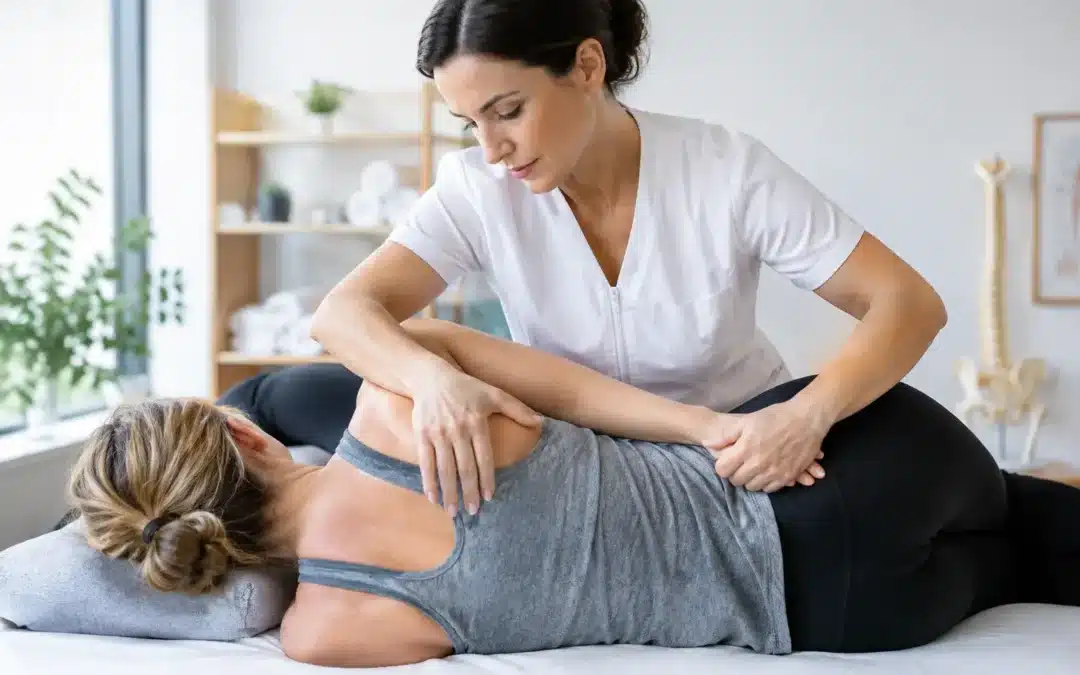
A stiff neck that keeps returning, low back pain after a long day at a desk, or a knee that never quite feels right after an old injury can affect far more than one body part. Osteopathic techniques are hands-on approaches designed to look at the whole picture: how your joints move, how your muscles adapt, how your posture changes under strain, and where the body may be compensating.
Rather than simply chasing the most painful spot, osteopathic manual therapy considers why that area may be under stress in the first place. For many people, that means a thoughtful path toward real relief from pain, easier movement, and greater confidence in daily activities.
What are osteopathic techniques?
Osteopathic techniques are manual methods used to assess and support the relationship between the body’s structure and function. A practitioner uses trained hands to feel for areas of restricted movement, muscle tension, joint stiffness, tissue sensitivity, and imbalances that may be contributing to discomfort.
Treatment is not one fixed routine. The approach should be personalized to your health history, goals, symptoms, activity level, and comfort. Someone with headaches and jaw tension may need a very different session from a runner recovering from a calf strain or a senior who wants to move more comfortably on stairs.
These techniques can be gentle, direct, or a blend of both. Some involve slow, sustained pressure or guided stretching. Others use carefully controlled movement at a joint. The purpose is not to force the body into place. It is to help restore healthier motion and reduce unnecessary strain so the body can move and function more efficiently.
Common osteopathic techniques and how they work
Manual osteopathy includes a range of approaches. A practitioner selects them based on what they find during the assessment and how your body responds during treatment.
Soft tissue and myofascial work
Muscles and fascia, the connective tissue surrounding muscles and other structures, can become tense or less mobile after repetitive work, injury, stress, prolonged sitting, or changes in activity. Soft tissue work uses hands-on pressure, lengthening, and movement to address areas that feel tight or overworked.
Myofascial techniques often use slower contact and sustained pressure rather than aggressive massage. They may be helpful when tension is contributing to reduced shoulder motion, postural discomfort, low back tightness, or the feeling that a movement is restricted. The pressure should always be adjusted to your tolerance.
Joint mobilization
Joint mobilization uses small, controlled movements to encourage better motion in a stiff joint. This may be used around the spine, hips, shoulders, wrists, ankles, or rib cage. It can be useful when a joint is not moving well and surrounding muscles are working overtime to compensate.
Mobilization is different from a forceful adjustment. Many people prefer its measured, gentle nature, particularly after an injury or when they are concerned about discomfort. Still, the best option depends on the person. A sensitive, inflamed area may need a lighter approach, while long-standing stiffness may benefit from gradual work combined with movement guidance.
Muscle energy techniques
Muscle energy techniques involve a gentle contraction from the patient against the practitioner’s resistance. After a brief effort, the muscle is allowed to relax and the practitioner may guide the area slightly further into a comfortable range of motion.
This active approach can help improve mobility while giving the patient a role in the treatment. It is often used for areas such as the neck, pelvis, hips, and shoulders. Because it relies on controlled effort rather than force, it can be adapted for many different ages and activity levels.
Strain-counterstrain and positional release
Sometimes a painful or guarded muscle does not respond well to stretching. Positional release techniques place the body in a position of ease, allowing the nervous system and tissues to settle before returning to normal movement.
This can be especially useful for acute muscle spasm, tender areas, or people who feel sore after more direct treatment. Gentle does not mean ineffective. When the body is guarding, reducing that protective tension may be the first meaningful step toward restoring movement.
Cranial and gentle head, neck, and jaw work
Headaches, migraines, TMJ discomfort, neck tension, and stress-related clenching can involve several connected areas: the jaw, upper neck, shoulders, breathing muscles, and posture. Gentle work around the head, neck, and jaw may be used to address restrictions and tension patterns in these regions.
This does not mean every headache has the same cause. Headaches can have many triggers, including medical conditions that require assessment from a physician. A careful practitioner will ask about the pattern, severity, and associated symptoms before deciding whether manual therapy is appropriate.
Visceral and lymphatic-focused techniques
The body does not operate as separate systems. Breathing patterns, abdominal tension, scar tissue, posture, and movement can influence how the trunk feels and functions. Some osteopathic practitioners use gentle techniques around the abdomen and rib cage to support mobility and circulation in the surrounding tissues.
Lymphatic-focused work may also be used as part of a broader plan for swelling support and tissue recovery. These approaches are not a replacement for medical evaluation, especially for unexplained abdominal pain, significant swelling, digestive changes, or circulatory concerns. They work best when used thoughtfully within the right scope of care.
What a session may feel like
Your first visit should begin with a conversation. You may discuss when symptoms began, what makes them better or worse, past injuries, work demands, exercise habits, sleep, stress, and relevant health conditions. A movement assessment helps identify how your body is functioning as a connected system.
During treatment, you may feel gentle pressure, stretching, guided movement, or a temporary tenderness in a tight area. You should not feel that you need to push through sharp pain. Speak up if something feels too intense, uncomfortable, or unfamiliar. Good care is collaborative, and your feedback helps guide the session.
Afterward, some people feel looser or more mobile right away. Others notice changes gradually over the following day or two. Mild soreness can occur, particularly when tissues have been very tense or you are returning to activity after an injury. Your practitioner may suggest simple movement, hydration, pacing strategies, or exercises that support the work done in the session.
When osteopathic manual therapy may help
Osteopathic care is often sought for back and neck pain, sciatica-like symptoms, joint stiffness, sports injuries, repetitive strain, posture-related tension, headaches, TMJ discomfort, and mobility changes associated with aging. It may also support pregnancy-related body changes and recovery from daily physical demands.
Results vary because pain is personal and often has more than one contributor. A desk worker’s shoulder pain may involve workstation habits, stress, sleep position, and reduced upper-back movement. An athlete’s recurring hamstring strain may involve training load, hip mobility, recovery, and technique. Hands-on treatment can be valuable, but lasting improvement may also require changes in movement, strength, workload, or daily habits.
A whole-body approach does not mean ignoring the painful area. It means treating that area while asking what else may be influencing it.
Choosing care that feels right for you
Look for a practitioner who explains what they are assessing, invites questions, and adapts treatment to your needs. You should understand the goals of your care plan and what you can realistically expect over time. If a technique is not comfortable or does not fit your preferences, there are often other ways to work toward the same goal.
Manual therapy also has limits. Seek prompt medical attention for severe or sudden symptoms, chest pain, new weakness or numbness, loss of bowel or bladder control, unexplained fever, significant trauma, or a severe headache unlike your usual pattern. The right next step may be medical care, imaging, rehabilitation, or coordinated support alongside osteopathic treatment.
At Osteo Difference, care begins by listening closely and looking beyond the symptom alone. Whether pain has interrupted your work, sport, sleep, or time with family, a personalized approach can help you understand your body’s patterns and take a practical next step toward moving with more ease.