
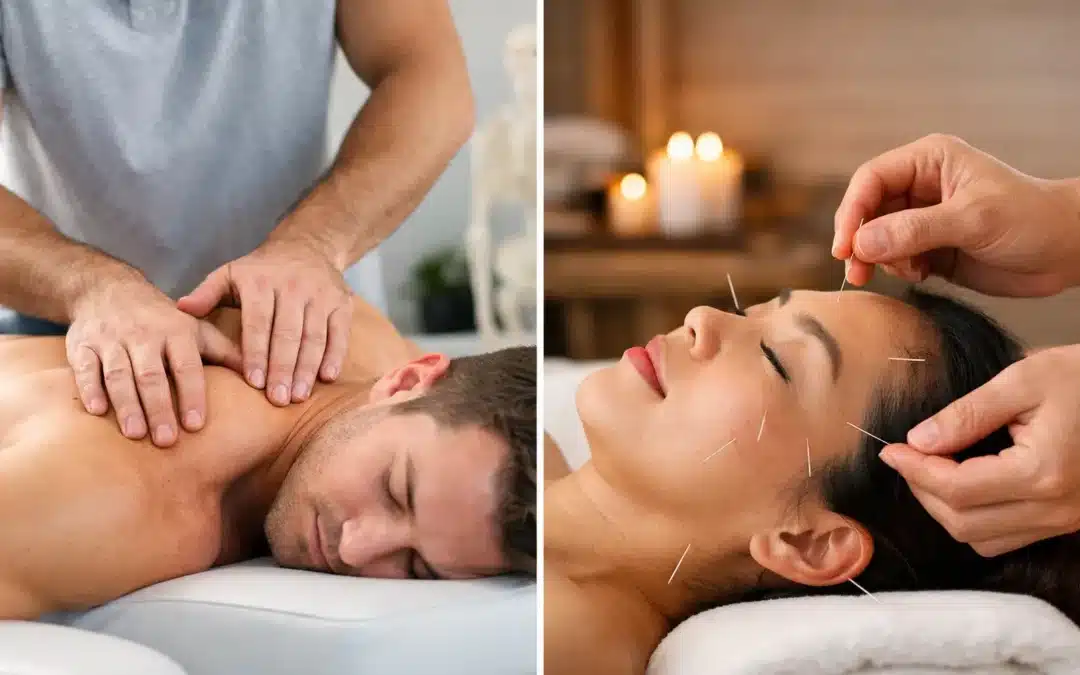
A stiff neck that returns after every workweek, a low back that complains after a long drive, or headaches that seem tied to jaw tension can leave you searching for care that feels more personal than a quick fix. When considering osteopathy versus acupuncture, the right choice usually comes down to what is driving your symptoms, what type of treatment you are comfortable with, and the outcome you want from care.
Both approaches are used by people seeking natural, non-surgical support for pain and function. They are not interchangeable, though. Osteopathic manual therapy focuses on how the body moves and works as a connected system. Acupuncture uses very fine needles at specific points to support pain relief and other health goals. Understanding those differences can make your next step feel much clearer.
Osteopathy versus acupuncture: the core difference
Manual osteopathy is hands-on care. An osteopathic manual practitioner assesses how your joints, muscles, connective tissues, posture, circulation, and movement patterns may be contributing to discomfort. Treatment may include gentle joint mobilization, soft-tissue techniques, stretching, muscle release, and other manual approaches chosen for your needs.
The goal is not simply to chase the painful spot. For example, shoulder pain may relate to tension through the neck and upper back, limited rib movement, or a work setup that keeps one side of the body overloaded. A practitioner looks at the whole picture and creates a plan to help restore more comfortable movement.
Acupuncture is rooted in traditional Chinese medicine and is also used in some modern pain-management settings. A trained practitioner inserts very thin, sterile needles into selected points on the body. Depending on the provider and treatment style, those points may be chosen using traditional patterns, anatomy, trigger points, or a combination of approaches. Some people experience a sense of calm or a gradual reduction in pain after treatment.
Neither treatment should be treated as a one-size-fits-all answer. The most helpful option depends on your symptoms, health history, preferences, and whether there are signs that you need medical assessment first.
When manual osteopathy may be a better fit
Osteopathic manual therapy often suits people who want a detailed, hands-on assessment of how their body is moving. It can be especially helpful when pain appears connected to posture, an injury, repetitive strain, stiffness, or a change in movement habits.
Someone who spends hours at a desk, for instance, may feel pain in the neck but also have restricted upper-back movement, tight chest muscles, and reduced shoulder mobility. Treating only the neck may bring short-term comfort. Looking at those connected areas may offer a better path toward lasting improvement.
Manual osteopathy can be a thoughtful option for concerns such as back or neck pain, sciatica-like symptoms, joint stiffness, sports injuries, tension headaches, TMJ discomfort, and mobility changes that develop with age. It may also support recovery when the body feels generally tight or unbalanced after pregnancy, travel, a demanding work season, or a period of reduced activity.
Treatment is typically interactive. Your practitioner may ask you to move, check how particular areas respond, explain what they are finding, and adjust the techniques to your comfort level. For people who appreciate understanding why a problem may be happening, this collaborative approach can be reassuring.
What an osteopathic appointment can feel like
A first visit usually begins with a conversation about your symptoms, daily activities, prior injuries, health history, and goals. The physical assessment may include observing posture and movement, gently checking joint mobility, and identifying areas of tension or compensation.
Hands-on treatment should not feel forced or rushed. Some techniques can create temporary tenderness, especially when tissues are already sensitive, but care should be adapted if something is too intense. You may also receive practical guidance on movement, ergonomics, pacing activity, or simple exercises to support your progress between appointments.
When acupuncture may be a better fit
Acupuncture may appeal to people who prefer a needle-based treatment or who are seeking support for pain, muscle tension, stress-related symptoms, or certain chronic concerns. While experiences vary, some people find that acupuncture helps them feel relaxed while reducing the intensity of persistent discomfort.
It may be worth considering when your main priority is pain modulation or when you have tried other options without the response you hoped for. Acupuncture can also be used alongside other forms of care when the providers agree it is appropriate. A person recovering from an overuse injury, for example, may benefit from movement-based rehabilitation while using acupuncture as one component of a broader pain-management plan.
Needle comfort matters. Acupuncture needles are much thinner than needles used for injections, and many people report little more than a brief sensation on insertion. Still, it is not the best fit for everyone. If needles make you anxious, that feeling deserves respect. You should never feel pressured to choose a treatment that leaves you more tense than supported.
Questions to ask an acupuncture provider
Before booking, ask about the practitioner’s training, the kinds of concerns they commonly treat, how they maintain cleanliness and use sterile single-use needles, and what you can expect during the first appointment. It is also reasonable to ask how they decide which points to use and how they will measure progress over a series of visits.
Open communication is part of safe care. Tell the provider about medications, bleeding concerns, pregnancy, implanted medical devices, significant health conditions, or previous reactions to needling.
Can you combine osteopathy and acupuncture?
For some people, combining care can make sense. Osteopathic manual therapy may help address movement restrictions, tissue tension, and physical compensations, while acupuncture may be used to support pain relief or relaxation. The key is coordination rather than piling on treatments.
A good plan has a clear purpose. If you are receiving more than one type of care, each provider should know about the others, and you should be able to explain what is improving, what is not, and what activities still trigger symptoms. More appointments do not automatically mean better results. The focus should stay on meaningful changes in pain, mobility, sleep, confidence with movement, and daily function.
For many people, it is also helpful to pair treatment with manageable changes at home. That might mean breaking up long periods of sitting, gradually returning to exercise, adjusting a workstation, or learning how to move without bracing against pain. Lasting recovery often depends on both skilled treatment and the habits that support your body between visits.
Choosing care for your specific concern
Start with the pattern of your symptoms. If pain began after lifting, training, prolonged sitting, a fall, or a noticeable shift in mobility, a hands-on osteopathic assessment may help identify the mechanical factors involved. If you are primarily looking for a needle-based approach to pain relief or relaxation, acupuncture may feel more aligned with your preferences.
Your comfort with treatment is equally relevant. Some people want hands-on work and clear movement guidance. Others prefer a quiet session with minimal talking and needling. The best approach is one you can participate in consistently and feel confident discussing with your provider.
Be cautious about any promise of a cure, especially for long-standing or complex symptoms. Healing is rarely linear. A trustworthy practitioner explains what they can and cannot address, sets realistic expectations, and refers you for medical care when symptoms fall outside their scope.
When pain needs medical attention first
Natural care can be valuable, but it is not a substitute for urgent medical assessment. Seek prompt medical attention for chest pain, trouble breathing, sudden weakness or numbness, loss of bladder or bowel control, a severe new headache, fainting, unexplained weight loss, fever with severe pain, or pain after a significant accident.
You should also speak with a qualified health professional before beginning treatment if you have a serious medical condition, are taking blood-thinning medication, have a history of cancer, or have symptoms that are worsening without a clear reason. The right care begins with knowing when a problem may need further investigation.
At Osteo Difference, the purpose of care is to help you move with greater ease while looking beyond the single area that hurts. Whether manual osteopathy is the right fit for you or another approach is more appropriate, you deserve to be heard, assessed thoughtfully, and supported with a plan that respects your goals.
The most useful choice is not the treatment with the biggest promise. It is the one that makes sense for your body, your comfort level, and your path back to the activities that matter to you.