
A hamstring strain that keeps tightening every time you try to jog again. A shoulder that feels fine at rest but catches when you reach overhead. An ankle sprain that should have healed weeks ago but still feels unsteady. This is often when people start looking for an osteopath for sports injury recovery - not just to calm the pain, but to understand why the body is not bouncing back the way it should.
Sports injuries are rarely just about one sore spot. The painful area matters, of course, but so do the joints above and below it, your movement habits, your training load, and how your body is compensating. That is where osteopathic care can be especially valuable. It looks at the whole picture, with the goal of helping you move better, heal more completely, and return to activity with more confidence.
Many athletes and active adults seeking sports injury treatment in Milton are surprised to learn that lingering pain is not always caused by the injured tissue itself. Restrictions in nearby joints, altered movement patterns, compensation strategies, and incomplete recovery can all contribute to persistent symptoms.
Looking Beyond the Injury
My background in engineering has influenced the way I assess movement and compensation patterns. Rather than focusing only on the painful area, I look at how different parts of the body interact and whether movement restrictions elsewhere may be contributing to ongoing symptoms.
In many cases, sports injuries become movement problems as much as tissue injuries. The original injury may heal, but altered mechanics, reduced mobility, protective muscle guarding, or compensation patterns can continue to affect performance and recovery.
What an osteopath for sports injury recovery actually does
Manual osteopathy focuses on the relationship between structure and function. In simple terms, that means how your muscles, joints, connective tissue, and circulation work together affects how well you recover. When one part of the body is restricted or overloaded, other areas often start working harder to compensate. Over time, that can slow healing and create a pattern of recurring pain.
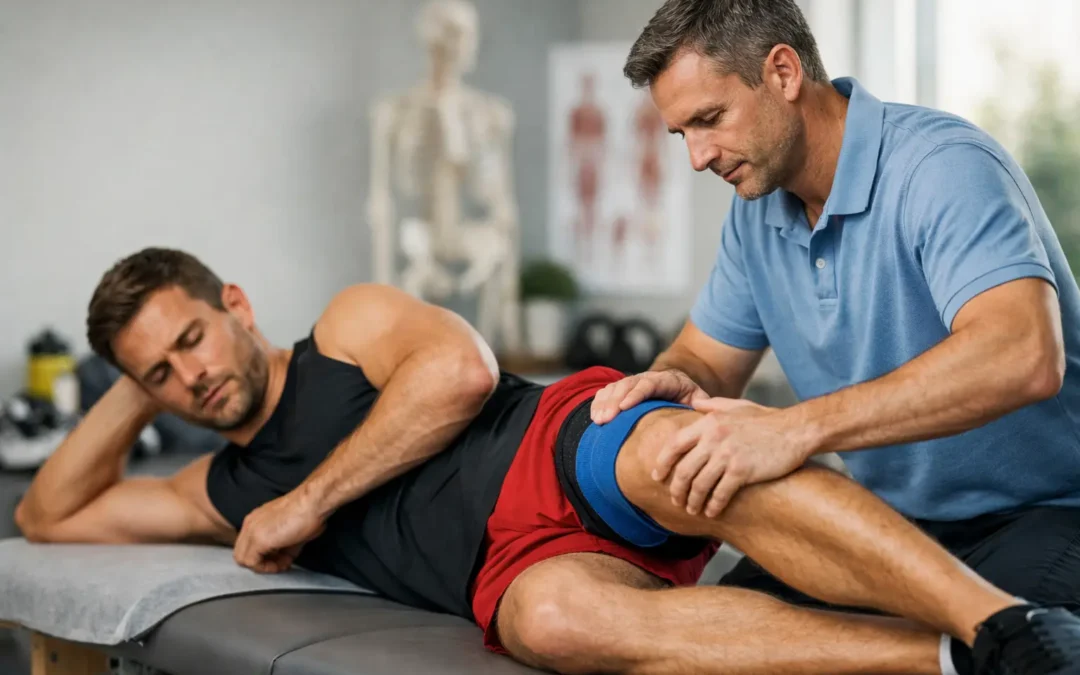
An osteopath uses hands-on treatment to assess and address those restrictions. Depending on the injury and the person, that may involve gentle joint mobilization, soft tissue work, myofascial release, and techniques that help improve circulation and reduce tension. The aim is not to force the body, but to support its natural recovery processes.
This approach can be helpful for many common sports-related issues, including sprains, strains, tendon irritation, knee pain, shoulder pain, hip tightness, low back pain, and overuse injuries. It can also help when the original injury is technically healed, but movement still does not feel right.
Why recovery is not always as simple as rest
Rest has a place, especially early on. But rest alone does not always restore normal movement, tissue balance, or stability. You may stop aggravating the area, yet still carry stiffness, weakness, or compensation patterns that show up the moment you return to your usual activity.
Take an ankle sprain as an example. The swelling may go down, and daily walking may feel manageable. But if ankle mobility stays limited, your calf can tighten, your knee can take on extra stress, and your hip mechanics can change. The ankle is the original injury, but the whole chain is affected.
The same thing happens with shoulder, back, and knee injuries. Pain can settle before function truly returns. A person may feel "mostly better" and then reinjure the area because the deeper movement problem was never addressed.
This is one reason osteopathic treatment appeals to active adults. It does not only ask, "Where does it hurt?" It also asks, "What changed in the way your body is moving, and what still needs support?"
Osteopath for sports injury recovery and whole-body assessment
A thorough assessment is one of the most important parts of care. Rather than focusing only on the injured tissue, an osteopath looks at how the injury is affecting your body as a whole. That can include posture, joint mobility, muscle balance, gait, breathing mechanics, and how you perform basic movements.
At Osteo Difference, many patients seeking sports injury recovery care come from Milton, Georgetown, Acton, Halton Hills, Campbellville, and surrounding communities. Whether the injury involves running, hockey, soccer, cycling, pickleball, golf, strength training, or recreational activities, understanding the whole-body impact of the injury is an important part of treatment.
This whole-body view matters because pain is often the end result of a broader pattern. A runner with knee pain may also have restricted hip rotation. A tennis player with elbow strain may have shoulder blade dysfunction and neck tension. A weightlifter with recurring low back pain may be guarding through the ribs and hips.
That does not mean every injury has a complicated hidden cause. Sometimes a strain is simply a strain. But even then, the body adapts around it. Identifying those adaptations can make recovery smoother and reduce the chance of the same problem returning.
What treatment may feel like
Many people expect sports injury care to be aggressive. Osteopathic treatment is usually more measured than that. It is hands-on and specific, but the goal is not to push through pain. The right approach depends on the stage of healing, the irritability of the tissue, and your overall condition.
In the early stage of an injury, treatment may focus on reducing protective tension, improving local mobility where appropriate, and supporting circulation so the body can settle and begin repair. Later, the focus may shift toward restoring fuller movement, reducing compensation, and helping the body tolerate normal loading again.
Good care should feel individualized. A recent calf strain in a recreational runner calls for a different pace than long-standing shoulder pain in a competitive athlete. The treatment should reflect your sport, your schedule, your injury history, and how your body responds.
When osteopathic care helps most
Osteopathy can be useful at different points in recovery. Some people come in soon after an injury, once serious damage has been ruled out and hands-on care is appropriate. Others seek treatment weeks or months later, when they realize the pain keeps returning or progress has stalled.
It can be especially helpful when an injury feels stuck in one of these situations: pain improves but movement still feels limited, the injured area keeps tightening after activity, one problem seems to be causing strain somewhere else, or you are worried about returning to sport too quickly and setting yourself back.
There are limits, and that is part of good clinical care. Severe injuries, fractures, suspected ligament tears, dislocations, and injuries with significant swelling, instability, numbness, or loss of strength need medical evaluation first. Osteopathic care works best as part of a responsible recovery plan, not as a substitute for urgent assessment when red flags are present.
Sports injuries are often associated with movement dysfunction, asymmetrical loading, mobility restrictions, training errors, inadequate recovery, or compensation patterns that develop after an injury. Identifying these factors may help reduce the risk of recurring problems and improve long-term performance.
The trade-off between pushing through and waiting too long
Athletes and active adults often fall into one of two patterns. Some return too soon because the pain is less intense and they are eager to get back. Others wait too long, hoping the issue will resolve on its own, while compensation patterns become more ingrained.
Neither extreme is ideal. Returning too early can re-irritate healing tissue. Waiting too long can lead to stiffness, deconditioning, and altered movement that make recovery harder. The right timing depends on the injury, the sport, and how the body is functioning overall.
This is where guidance matters. A thoughtful treatment plan can help you understand what the body is ready for now, what still needs protection, and what signs suggest you can safely increase activity. That kind of clarity often reduces the stop-start cycle many injured people experience.
Recovery is not just about the injured tissue
Healing well also depends on factors that people do not always connect to sports injuries. Sleep, stress, previous injuries, training errors, work posture, and daily physical demands all affect recovery. Someone with a desk job and neck tension may heal from a shoulder injury differently than someone whose work is physically active. A parent carrying toddlers, a cyclist training hard, and a senior returning to pickleball all place different demands on the body.
A whole-person approach looks at those realities rather than treating the injury in isolation. That is one reason many patients appreciate osteopathic care. It respects that recovery happens in real life, not just in a treatment room.
At Osteo Difference, that patient-centered view is central to care. The goal is not only to reduce pain in the short term, but to support lasting changes in mobility, comfort, and function.
What to expect from an osteopath for sports injury recovery
A good experience should leave you feeling informed, not confused. You should understand what may be contributing to the injury, what the treatment is trying to improve, and how progress will be measured. That may include changes in pain, but it should also include movement quality, confidence, and your ability to return to activities that matter to you.
You should also expect honesty. Some injuries improve quickly. Others need time, especially if they have been lingering for months or involve several compensations. The most effective care is rarely about a quick fix. It is about helping the body recover in a way that is more complete and more sustainable.
If you are dealing with a sports injury that is not resolving, or you keep running into the same setback every time you try to return to activity, it may be time to look beyond the symptom itself. Sometimes real relief from pain begins when someone takes the time to look at the whole picture.
Frequently Asked Questions About Sports Injury Recovery
Can a Milton Osteopath help sports injuries?
Many sports-related injuries may benefit from osteopathic manual therapy. Treatment focuses on restoring movement, improving mobility, reducing tension, and addressing compensation patterns that may interfere with recovery.
Can osteopathy help recurring sports injuries?
In some cases, recurring injuries are influenced by movement restrictions, altered biomechanics, or compensation patterns. Identifying these contributing factors may help reduce the likelihood of repeated flare-ups.
Is osteopathic treatment appropriate after an injury?
Once serious injuries have been assessed and medical clearance is appropriate, osteopathic treatment may be used as part of a broader recovery strategy.
How many treatments will I need?
Recovery timelines vary depending on the injury, sport, severity, and individual healing factors. Some conditions respond quickly, while others require a longer rehabilitation process.
When should I seek medical attention instead of osteopathic care?
Fractures, suspected ligament tears, significant swelling, instability, loss of strength, numbness, dislocations, or severe trauma should be medically assessed before pursuing manual treatment.
Key Takeaways
- Sports injuries often affect more than the injured tissue itself.
- Compensation patterns and movement dysfunction can contribute to lingering symptoms.
- Osteopathic manual therapy focuses on restoring mobility and improving movement quality.
- Recovery may involve addressing restrictions in joints, muscles, fascia, and surrounding structures.
- A whole-body approach may help reduce the risk of recurring injuries.
- Many athletes and active adults seek a Milton Osteopath when they want support returning to activity safely and confidently.
If you are looking for a Milton Osteopath for sports injury recovery, movement dysfunction, recurring strains, overuse injuries, or performance-related mobility concerns, a comprehensive assessment may help identify the factors contributing to delayed recovery. Patients from Milton, Georgetown, Acton, Halton Hills, and surrounding communities often seek care when they want a non-invasive approach focused on restoring movement and supporting long-term function.