
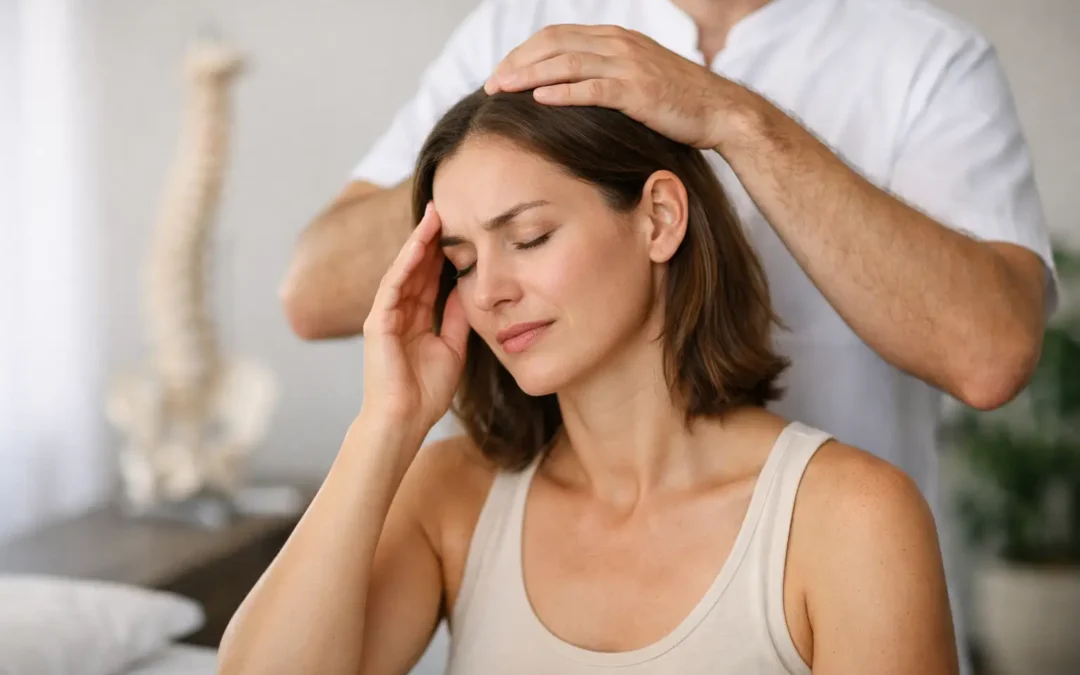
When a migraine hits, it rarely feels like just a headache. It can bring throbbing pain, light sensitivity, nausea, neck stiffness, and the sense that your whole system is under strain. That is why many people start looking into osteopathy for migraines natural relief - not as a quick fix, but as a way to understand what may be contributing to the pattern and how the body can be supported more fully.
For some people, migraines seem to come out of nowhere. For others, the pattern is easier to spot: long hours at a desk, poor sleep, jaw clenching, stress, hormonal shifts, old neck injuries, or a buildup of physical tension that never quite resets. Osteopathy looks at those connections. Instead of focusing only on the pain in the moment, it asks a broader question: what is putting repeated strain on the body, and how might that be feeding migraine symptoms?
How osteopathy approaches migraine care
Manual osteopathy is based on the idea that the body functions best when its structure moves well and its systems can work without unnecessary restriction. In migraine care, that often means looking beyond the head.
The neck, upper back, jaw, rib cage, diaphragm, and even posture habits can all affect how tension builds and how comfortably the body handles stress. If certain areas are tight, compressed, or moving poorly, that can increase strain on surrounding tissues and make some people more vulnerable to headaches or migraines.
This does not mean every migraine is caused by a musculoskeletal issue. Migraines are complex. They can involve neurological, hormonal, vascular, and lifestyle factors. But physical tension and movement restriction can still play a meaningful role, especially when symptoms are paired with neck pain, jaw tension, shoulder tightness, or posture-related strain.
An osteopathic assessment usually looks at how the body is functioning as a whole. That can include spinal and joint mobility, muscle tension, breathing mechanics, circulation, and how one area may be compensating for another. The goal is to find patterns that may be contributing to overload, then treat them gently and specifically.
Osteopathy for migraines natural relief - what treatment may involve
If you are considering osteopathy for migraines natural relief, it helps to know what treatment actually looks like. In most cases, care is hands-on, gentle, and tailored to the individual. There is no one standard protocol because migraine triggers and body patterns vary so much from person to person.
Treatment may focus on releasing tension through the neck and upper shoulders, improving mobility in the upper spine and rib cage, easing strain in the jaw, and supporting more efficient breathing mechanics. Some patients also benefit from work around the diaphragm, thoracic outlet, or cranial structures, depending on the practitioner’s assessment and approach.
The aim is not to force the body. It is to reduce mechanical stress, improve motion, and create better conditions for the nervous system to settle. That matters because many people with frequent migraines are not only dealing with pain, but with a body that seems stuck in a cycle of guarding and overload.
Sessions also tend to include conversation. A good osteopathic visit is not just treatment on a table. It includes listening carefully to symptom patterns, discussing triggers, and helping patients understand how sleep, work setup, stress, jaw habits, and movement may be affecting them. That whole-picture view is often where progress begins.
Who may benefit most
Osteopathic care is often most helpful for people whose migraines overlap with physical tension or recurring strain. That includes desk workers who spend hours with the head forward and shoulders rounded, people recovering from whiplash or old neck injuries, patients with TMJ tension, and those who notice migraines flare after stressful periods when the body feels tight and compressed.
It can also be useful for people who are trying to reduce reliance on medication alone, or who want a more supportive plan between acute episodes. Natural care does not mean ignoring medical treatment. It means adding another layer of support where appropriate.
That said, results depend on the person. If migraines are heavily influenced by hormones, food triggers, or other medical factors, osteopathy may help with tension and recovery without fully changing frequency. For others, especially when neck restriction is a major driver, it may make a more noticeable difference. Honest care means making room for both possibilities.
What the body connections can tell us
One of the most common patterns seen in people with headaches and migraines is reduced mobility through the upper neck and upper back. When those areas stiffen, nearby muscles often work harder to stabilize the head and shoulders. Over time, that can create a constant background level of tension.
Jaw tension is another piece that gets missed. Clenching at night or holding the jaw tightly during stressful days can feed into the temples, face, neck, and base of the skull. Patients are sometimes surprised to learn how much their headache pattern is linked to the way they breathe, hold their shoulders, or brace through the jaw without realizing it.
Breathing mechanics matter too. If breathing is shallow and mostly chest-driven, the neck and upper chest muscles often overwork. That can increase tension in the same regions already involved in many migraine patterns. Helping the rib cage and diaphragm move better may sound indirect, but it can change how strain is distributed through the body.
This whole-body perspective is one reason osteopathic care feels different. It looks at the chain of tension, not just the point where pain is felt.
What to expect after treatment
Some people feel lighter and looser right away. Others notice gradual change over several visits, such as fewer tension headaches, less neck stiffness between migraines, or shorter recovery time after an episode. Sometimes the first sign of progress is not that migraines disappear, but that the body feels less wound up all the time.
It is also normal for improvement to be uneven. Stressful weeks, lack of sleep, travel, or long hours at a computer can still trigger setbacks. That does not mean treatment is not helping. It may mean the body needs more consistency, or that home habits need to change alongside hands-on care.
A thoughtful treatment plan usually includes both in-office work and practical guidance. That might involve posture changes, jaw awareness, hydration, sleep positioning, breathing work, or simple movement strategies to reduce tension buildup during the day. Small adjustments can have a bigger effect than people expect when they are done consistently.
When to seek medical evaluation first
Migraine symptoms should always be taken seriously, especially if they are new, severe, or changing. Osteopathy is supportive care, not a replacement for medical evaluation when warning signs are present.
If you have the worst headache of your life, sudden neurological symptoms, new visual changes, confusion, weakness, fainting, fever with severe headache, or a major change in your usual pattern, medical care should come first. The same is true if headaches begin after a significant injury or are becoming more frequent and intense without a clear reason.
For many patients, the best approach is collaborative. Medical care can help with diagnosis and migraine management, while osteopathic treatment may help address tension, mobility restrictions, and physical contributors that affect how the body copes.
A more personal path to migraine support
People living with migraines are often told to simply manage symptoms and avoid triggers. That advice can help, but it can also feel incomplete when the body still feels tight, restricted, and reactive. Osteopathic care offers a different kind of support - one that listens for patterns, looks at the whole picture, and works with the body rather than against it.
At Osteo Difference, that means taking time to understand how your migraines show up in daily life, what physical patterns may be involved, and what kind of care makes sense for your body. For someone looking for osteopathy for migraines natural relief, that individualized approach can be just as important as the treatment itself.
If migraines have been leaving you tense, frustrated, and limited, gentle hands-on care may be a meaningful next step - not because it promises a miracle, but because your body deserves more than symptom-chasing alone.