
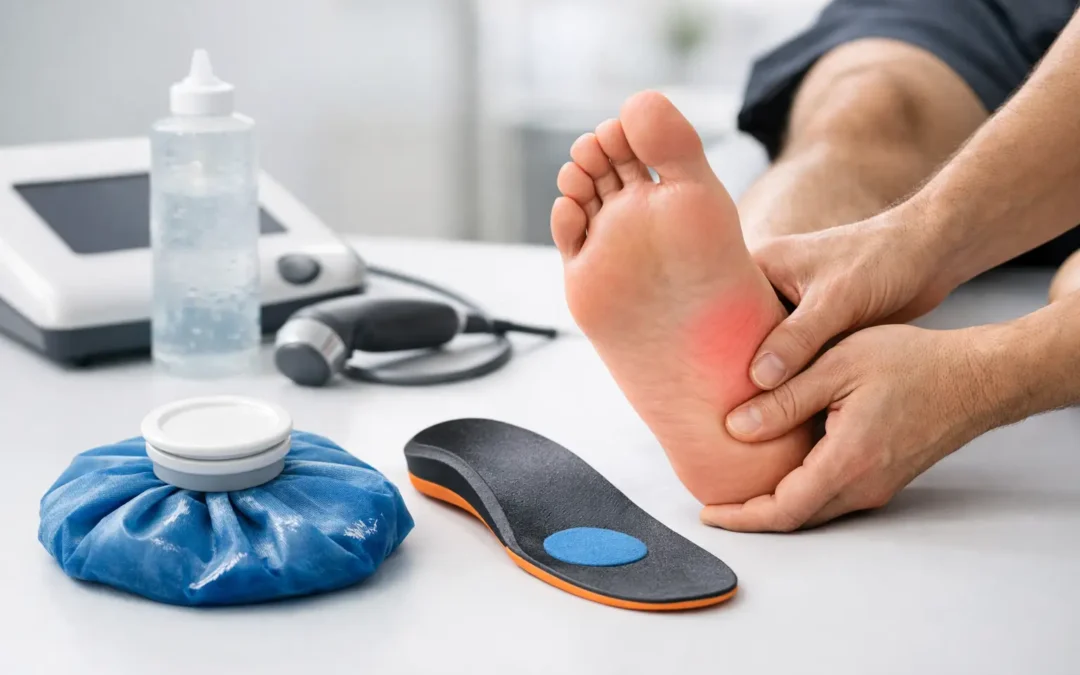
That sharp, first-step pain when you get out of bed can make a short walk to the kitchen feel like a major task. The best treatments for plantar fasciitis are rarely about one quick fix. Lasting improvement usually comes from reducing irritation while addressing the movement, strength, footwear, and daily-load factors that may be keeping the heel painful.
Plantar fasciitis is one of the most common causes of heel pain. The plantar fascia is a thick band of connective tissue that runs along the bottom of the foot, linking the heel to the toes. It supports the arch and helps the foot manage force with every step. When this tissue and the structures around it are overloaded, the result can be soreness, stiffness, or a stabbing sensation near the inside of the heel.
The condition can affect runners and people on their feet all day, but it is also common among desk workers who suddenly increase activity, people returning to exercise after a break, and anyone whose footwear or walking habits have changed. A thoughtful plan looks at the whole picture rather than treating the foot in isolation.
Why plantar fasciitis can linger
Plantar fasciitis often develops gradually. A new running routine, long shifts on hard floors, unsupportive shoes, a rapid jump in walking volume, or tight calves can all increase strain through the bottom of the foot. Sometimes the problem begins after an obvious change. Other times, pain seems to appear without a clear cause because several smaller stresses have accumulated over time.
The foot does not work alone. Limited ankle motion, calf tension, weakness in the foot or hips, altered gait, and reduced balance can change how force travels through the body. For example, if the ankle does not bend comfortably while walking, the foot may compensate by placing more pull through the plantar fascia. That is why simply pressing on the painful area may bring temporary relief without fully solving the problem.
Pain is often strongest with the first few steps after resting, then eases as the foot warms up. It may return after a long day, extended standing, or activity that exceeds what the tissue can currently tolerate. This pattern is useful information, not something to push through.
Best treatments for plantar fasciitis: start with load management
Rest does not have to mean stopping all movement. Complete inactivity can leave the foot and lower leg less prepared to handle everyday demands. Instead, the goal is to reduce the specific activities that sharply increase pain while maintaining comfortable movement.
If running, long walks, or court sports are triggering heel pain, consider temporarily reducing distance, intensity, hills, or frequency. Low-impact activity such as cycling or swimming may be more comfortable while symptoms settle. For people who stand at work, short movement breaks, a change in footwear, or a supportive mat can make a meaningful difference.
Use your symptoms as a guide. Mild discomfort that settles quickly may be manageable, but pain that becomes sharper during activity or lingers worse the next morning is a sign the load may be too high. Progress is rarely perfectly linear. The aim is steady improvement in how the foot feels and functions week to week.
Support the foot without becoming dependent on support
Shoes do not have to be expensive to be helpful, but they should suit your feet and your daily demands. For many people during a painful flare, a shoe with a stable sole, comfortable cushioning, and enough room through the toes is more tolerable than a thin, worn-out, or overly flexible shoe. Avoiding prolonged barefoot walking on hard floors can also reduce irritation in the early stages.
Over-the-counter arch supports or heel cups can be useful for some people, especially if they make standing and walking more comfortable. They are not a cure, and not every arch shape needs the same type of support. The right choice is the one that improves comfort without creating new pressure points, numbness, or pain elsewhere.
Night splints may help people whose first-step pain is significant. They keep the ankle and foot in a gently lengthened position during sleep, which can reduce the intense pull felt with those first morning steps. They can be effective, but comfort and consistency matter. A device that interrupts sleep is unlikely to be a good long-term solution.
Restore mobility where it is limited
Gentle mobility work can help when tightness in the calves, ankles, or sole of the foot is contributing to the problem. This should feel like a controlled stretch, not a test of pain tolerance.
A useful option is a calf stretch with the knee straight, followed by one with the knee slightly bent. The straight-knee version targets more of the larger calf muscle, while the bent-knee position reaches deeper calf structures that also influence ankle motion. Hold each stretch at a comfortable intensity and repeat regularly rather than forcing a long, aggressive stretch once in a while.
You can also gently stretch the plantar fascia by sitting down, crossing one leg over the other, and drawing the toes back until you feel mild tension along the bottom of the foot. This can be particularly helpful before taking your first steps in the morning. If it causes sharp pain or tingling, stop and seek guidance.
Rolling the foot over a ball or a chilled water bottle may feel soothing for short-term symptom relief. It is best viewed as a comfort measure, not the main treatment. Too much pressure directly into an already sensitive heel can make some cases feel worse.
Build strength for better long-term support
The plantar fascia is designed to manage force, but it benefits from support from the muscles of the feet, calves, and hips. Once acute pain begins to settle, progressive strengthening is often one of the most valuable parts of recovery.
Slow, controlled calf raises are a practical starting point. Begin with both feet if needed, holding onto a counter for balance. As strength and comfort improve, progress toward single-leg raises or use a step to increase the range of motion. The exercise should be challenging but manageable, with symptoms monitored later that day and the following morning.
Foot-strengthening exercises can also help improve control of the arch. Try gently shortening the foot by drawing the ball of the foot toward the heel without curling the toes. Balance work, such as standing on one foot near a stable surface, can help the foot and ankle respond more effectively to everyday changes in terrain.
The right progression depends on your baseline. A runner preparing to return to training will need a different plan than someone whose pain developed during long retail shifts or while caring for young children. Individualized guidance can prevent the common cycle of doing too much too soon, then resting until the pain returns again.
When hands-on care can help
Manual osteopathic care can be a helpful part of a comprehensive plantar fasciitis plan, particularly when heel pain is connected to restrictions or strain elsewhere in the body. Treatment may include gentle hands-on techniques to improve mobility through the foot and ankle, address tension in the calves, and assess how the knees, hips, pelvis, and lower back may be influencing walking mechanics.
At Osteo Difference, the goal is not simply to chase the sore spot. A careful assessment looks at how you move, what changed before the pain began, and which areas may be adding unnecessary stress to the foot. Hands-on care is paired with practical advice around activity, movement, and recovery so you have a plan that fits real life.
Manual therapy is not a substitute for gradual strengthening and appropriate load management. It can, however, make movement more comfortable and help address restrictions that may be limiting progress.
Know when heel pain needs further evaluation
Not every heel pain is plantar fasciitis. A stress injury, nerve irritation, tendon problem, inflammatory condition, or other concern can create similar symptoms. Seek prompt medical assessment if you cannot bear weight, have major swelling, redness or warmth, numbness, fever, pain after a significant injury, or pain that is worsening despite reducing activity.
It is also wise to get assessed if heel pain has not improved after several weeks of consistent self-care, keeps returning, or is interfering with work, sleep, or normal mobility. The sooner the true driver is identified, the easier it is to choose care that matches your needs.
Your feet carry you through every shift, school run, workout, and errand. Giving heel pain a patient, whole-body approach can help you move with more confidence again - not just for the first few steps tomorrow morning, but for the life you want to get back to.